


Public welfare hotline:+86-010-84404273
Email: apepcy@apepcy.org
To thoroughly implement the national strategies
of "Healthy China" and "Yangtze River Delta Integration" and promote
high-quality development of healthcare services in the Yangtze River Delta
region, we are guided by the principles of "implementing a health-first
development strategy", "benefiting people's livelihood and promoting
consumption", and "creating a virtuous cycle of economic development and
livelihood improvement". Our aim is to further harness expert wisdom and
mobilize the strength of society as a whole, enhance healthcare integration
across the Yangtze River Delta, promote high-quality development of healthcare
governance in the region, and advance people's health and well-being. From
September 26 to 28, 2025, the 5th Yangtze River Delta Health Summit was held in
Hangzhou, Zhejiang Province, under the theme "Implementing Health-first
Development and Achieving Mutual Promotion of Economy and People's
Livelihood".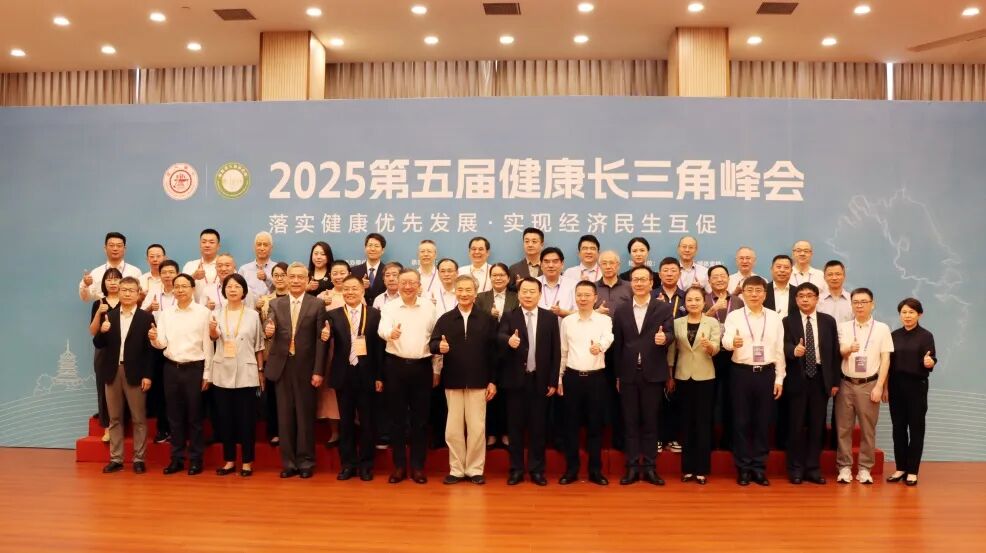
Group photo of distinguished conference guests
The conference was guided by the Executive Committee of the Yangtze River Delta Ecological Green Integrated Development Demonstration Zone, hosted by Shanghai Jiao Tong University, and jointly organized by the Institute of Healthy Yangtze River Delta of Shanghai Jiao Tong University, the School of International and Public Affairs, the China Institute for Urban Governance, Shanghai Jiao Tong University Think Tank Center, Shanghai Jiao Tong University Local Cooperation Office, and Beijing Changier Education Foundation, with co-organization by Zhejiang Gongshang University and Wannan Medical College, and media support from Health News, People's Daily Health Client, China.com.cn, China.com, and other media outlets.
Luo Fuhe, Vice Chairman of the 12th CPPCC and
former First Vice Chairman of the Central Committee of the China Association for
Promoting Democracy; Cai Xiujun, Standing Committee Member of the 14th CPPCC and
Vice Chairman of Zhejiang Provincial CPPCC; Wang Renyuan, Party Secretary and
Director of Health Commission of Zhejiang Province; Jin Weijia, Vice Director of
the Science, Education, Health and Sports Committee of Anhui Provincial CPPCC
and former Party Secretary and Director of Anhui Medical Insurance Bureau; Yao
Yingshui, Deputy Party Secretary and President of Wannan Medical College; Jia
Ning, Director of the Committee on Population, Resources and Environment of the
Hainan Provincial CPPCC and former Director of Medical Insurance Bureau; Di
Jianzhong, Party Group Member and Deputy Director of Shanghai Municipal Health
Commission; Zhu Min, Party Committee Member and Deputy Director of Jiangsu
Commission of Health; Yu Xinle, Party Committee Member and Deputy Director of
Health Commission of Zhejiang Province; Wang Huixiao, Deputy Director of Health
Commission of Anhui Province and Director of Traditional Chinese Medicine
Administration; Sun Changxiang, Party Group Member and Deputy Director of
Jiangxi Provincial Health Commission; Wu Daotao, Deputy Secretary-General of
Zhejiang Provincial CPPCC and Full-time Deputy Chairman of Chinese Peasants And
Workers Democratic Party Zhejiang Provincial Committee; Zhou Cheng, Deputy Party
Secretary of Shanghai Jiao Tong University; Zhao Rong, Deputy Director of
Shanghai Hospital Development Center; Gu Qing, Vice President of Zhejiang
Gongshang University; Ni Weijie, Vice President of Shanghai Ocean University; Xu
Su, former Deputy Director of Shanghai Medical Reform Office; Lin Feng, former
Deputy Secretary-General of Zhenjiang Municipal People's Government; Wu Hong,
Second-level Inspector and Director of Medical Administration Division of
Shanghai Municipal Health Commission; Zhang Yinjun, Deputy Director of the Women
and Children Committee of the Central Committee of the China Association for
Promoting Democracy and President of Beijing Changier Education Foundation; Gao
Shuqun, Honorary President of Beijing Changier Education Foundation; Huang
Honghong, Deputy Director of the Executive Committee of Yangtze River Delta
Ecological and Green Integrated Development Demonstration Zone; Yang Zhe,
Second-level Inspector of Healthcare Security Administration of Guangdong
Province and Vice Chairman and Secretary-General of Guangdong Medical Insurance
Research Association; Zhou Shuqin, Vice President of Nanjing Academy of Social
Sciences; Tang Jianhua, former Second-level Inspector of Jiangxi Province
Healthcare Security Administration; Yu Jiegen, Party Committee Member and Vice
President of Wannan Medical College; Fang Jianguo, Party Secretary and Director
of Hangzhou Municipal Health Commission; Lu Chao, Standing Committee Member and
Vice President of Anhui University of Science and Technology; Zhou Jianjun,
Chief Planner of Zhejiang Zhoushan Archipelago New Area; Shen Lidan, Party
Secretary of School of International and Public Affairs, Shanghai Jiao Tong
University; Zhang Lufa, Vice Dean of School of International and Public Affairs,
Shanghai Jiao Tong University and Executive Director of Institute of Healthy
Yangtze River Delta, along with more than 500 leaders, experts, and
representatives from across the country, jointly witnessed this summit.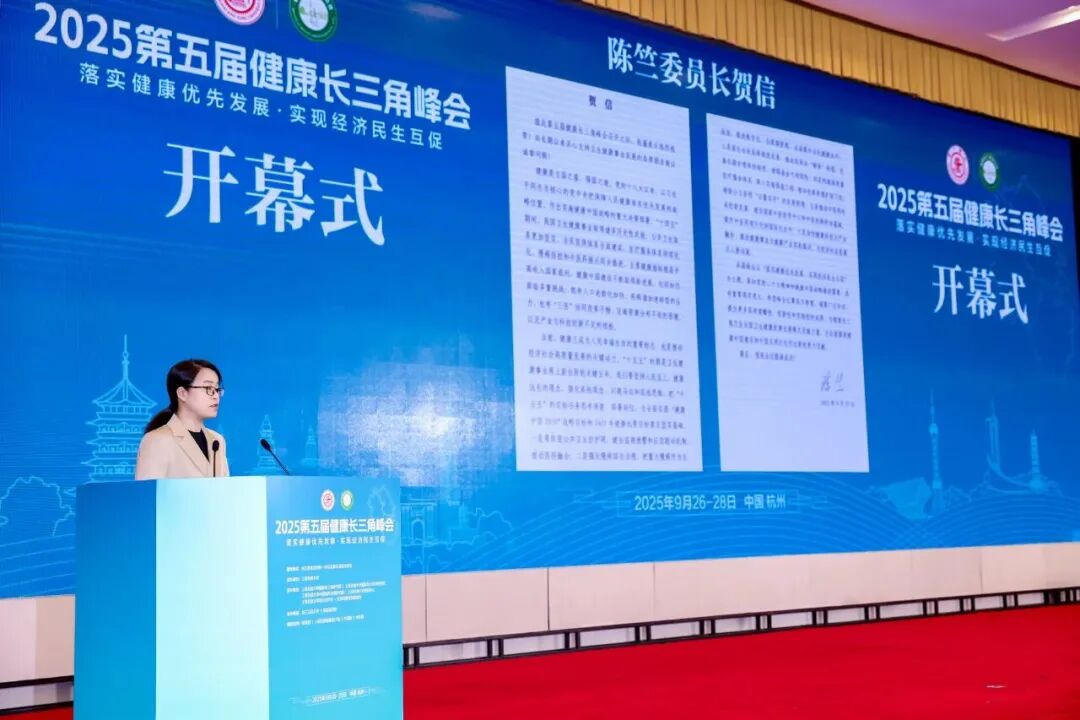
The opening ceremony of the summit was presided
over by Shen Lidan, Party Secretary of the School of International and Public
Affairs, Shanghai Jiao Tong University. Chen Zhu, Vice Chairperson of the
Standing Committee of the 13th National People's Congress, former Chairman of
the China Association for Promoting Democracy, and former President of the Red
Cross Society of China, sent a congratulatory letter.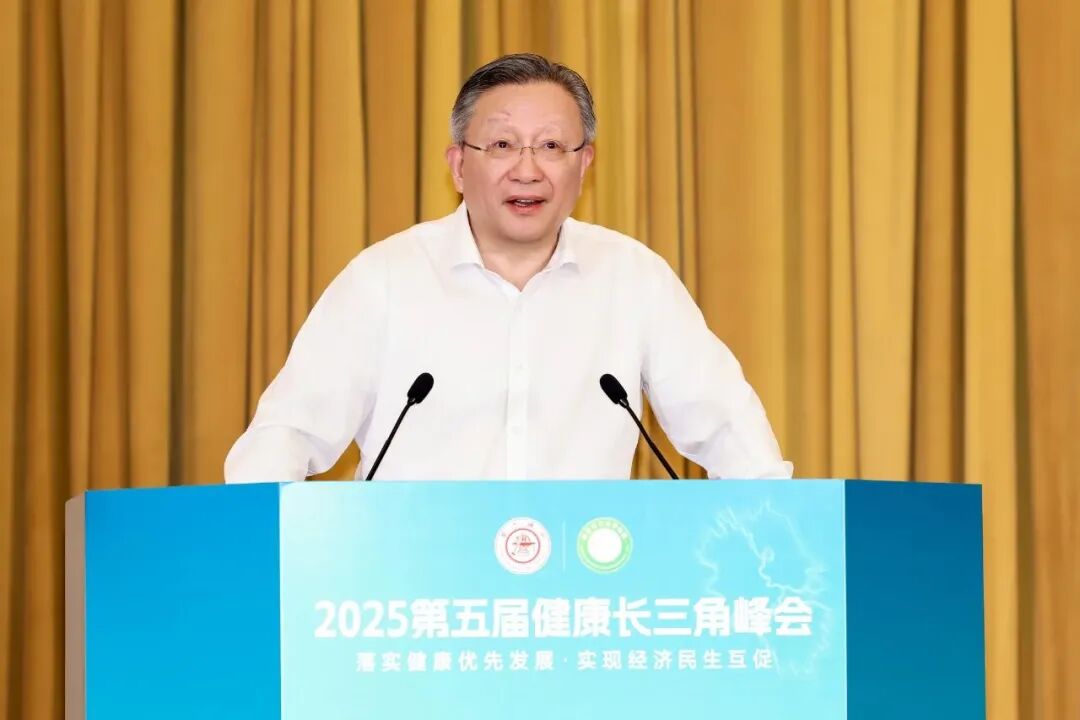
Address by Cai Xiujun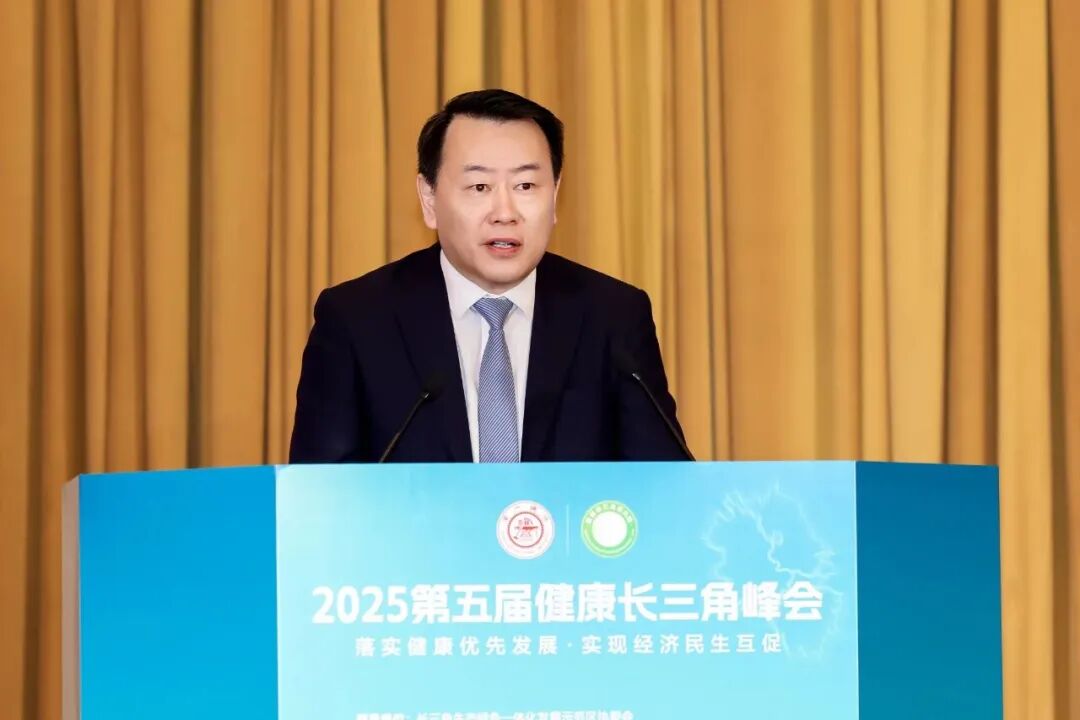
Address by Wang Renyuan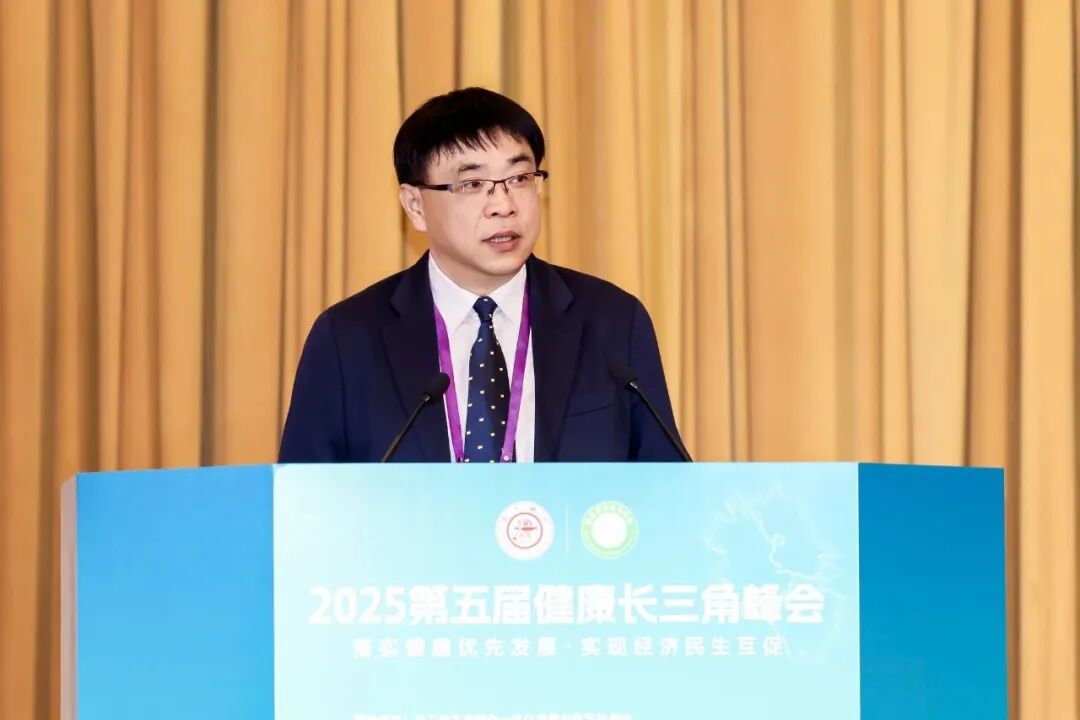
Speech by Zhou Cheng
Cai Xiujun, Standing Committee Member of the
14th CPPCC and Vice Chairman of Zhejiang Provincial CPPCC, Wang Renyuan, Party
Secretary and Director of the Health Commission of Zhejiang Province, and Zhou
Cheng, Deputy Party Secretary of Shanghai Jiao Tong University, attended the
opening ceremony and delivered speeches, extending warm congratulations on the
convening of the summit and emphasizing the vital importance of health-first
development for economic and social progress.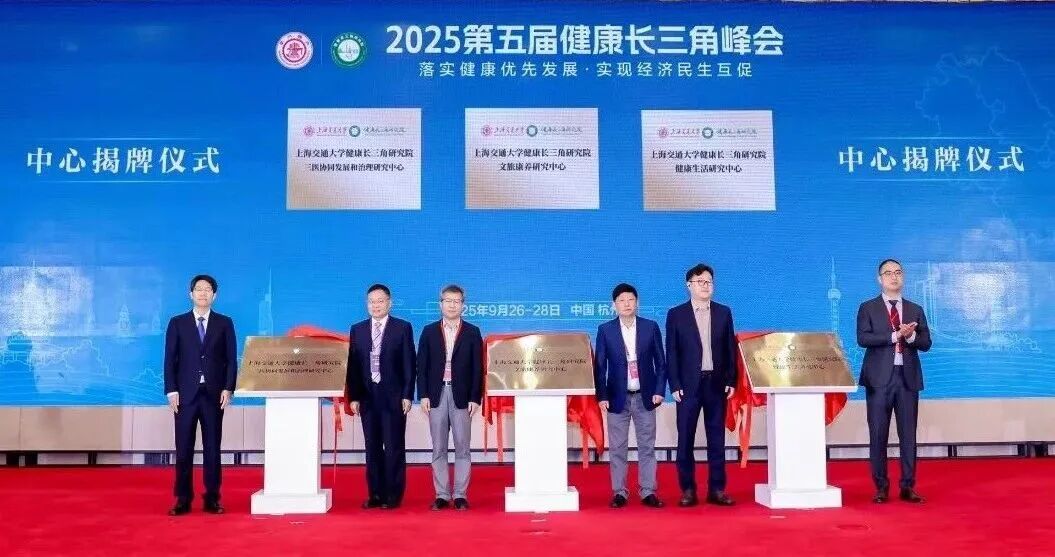
Three new centers of the Institute of Healthy Yangtze River Delta, Shanghai Jiao Tong University unveiled
At the meeting, the Cultural Tourism and Health
Research Center of the Institute of Healthy Yangtze River Delta, Shanghai Jiao
Tong University, the Healthy Living Research Center of the Institute of Healthy
Yangtze River Delta, Shanghai Jiao Tong University, and the Research Center for
Collaborative Development and Governance of Tri-Medical Fields of the Institute
of Healthy Yangtze River Delta, Shanghai Jiao Tong University were officially
inaugurated.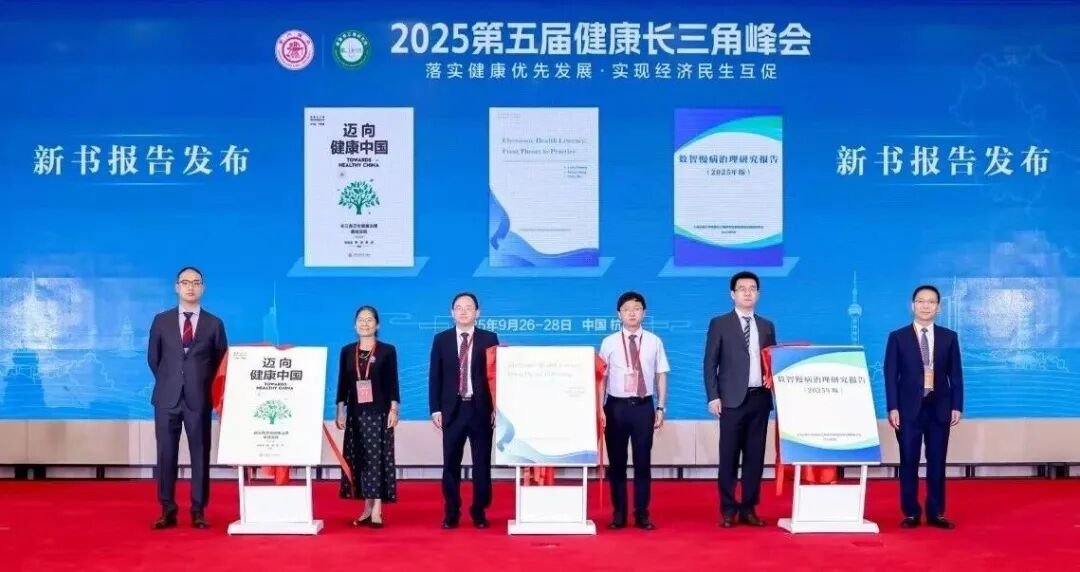
Launch ceremony for new book and research report
At the opening ceremony, two new books from the
Institute of Healthy Yangtze River Delta, Shanghai Jiao Tong University -
"Towards Healthy China (Volume 4): Best Practices in Health Governance in the
Yangtze River Delta" and "Electronic Health Literacy: From Theory to Practice" -
along with the research report "Digital Intelligence-Based Chronic Disease
Governance Research Report (2025 Edition)" were released, providing theoretical
support and practical guidance for the development of health and healthcare
initiatives in the Yangtze River Delta.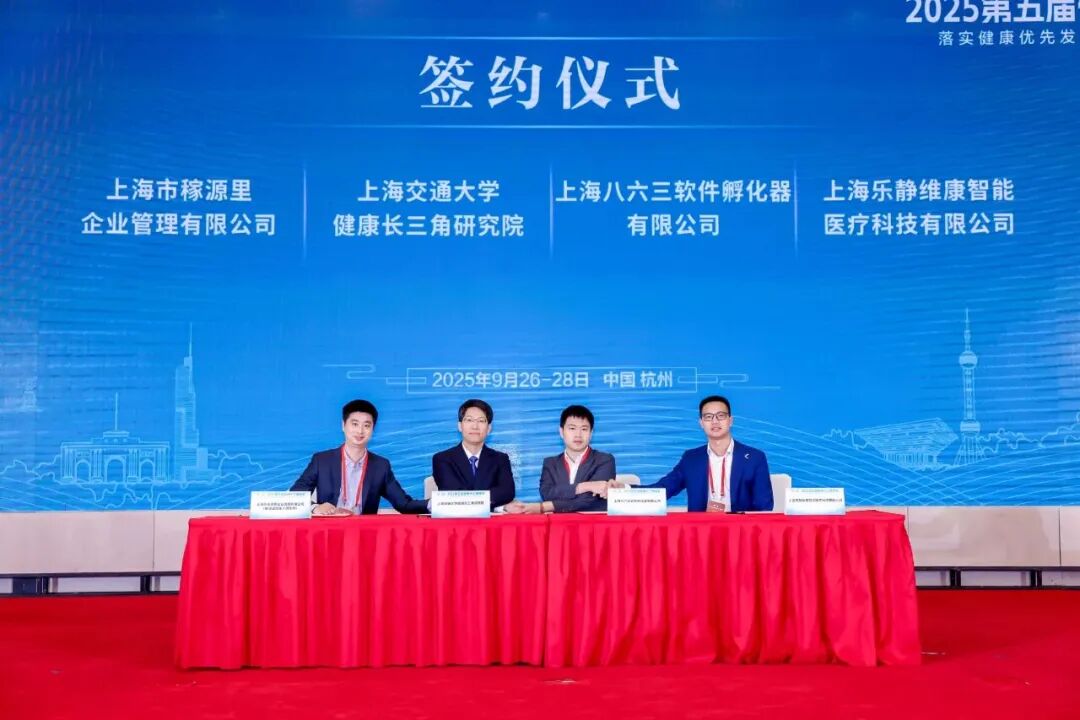
Signing ceremony
To promote the integrated innovation and
development of "industry, academia, research, and application", the Institute of
Healthy Yangtze River Delta, Shanghai Jiao Tong University, Shanghai 863
Software Incubator Co., Ltd., Shanghai Jiayuanli Enterprise Management Co.,
Ltd., and Shanghai Lejingweikang Intelligent Medical Technology Co., Ltd. signed
a strategic cooperation agreement on-site.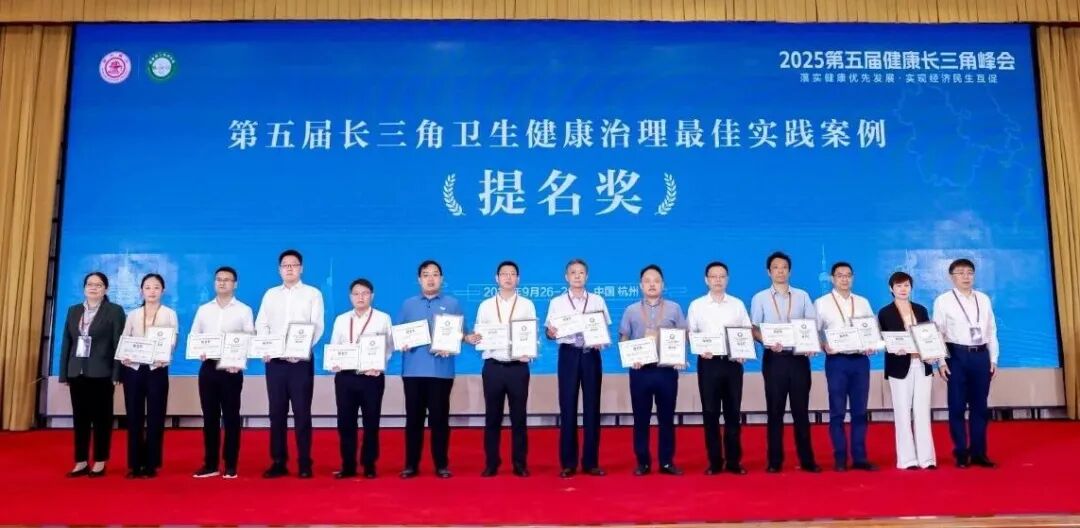
The 5th Yangtze River Delta Health Governance
Best Practice Cases - Nomination Award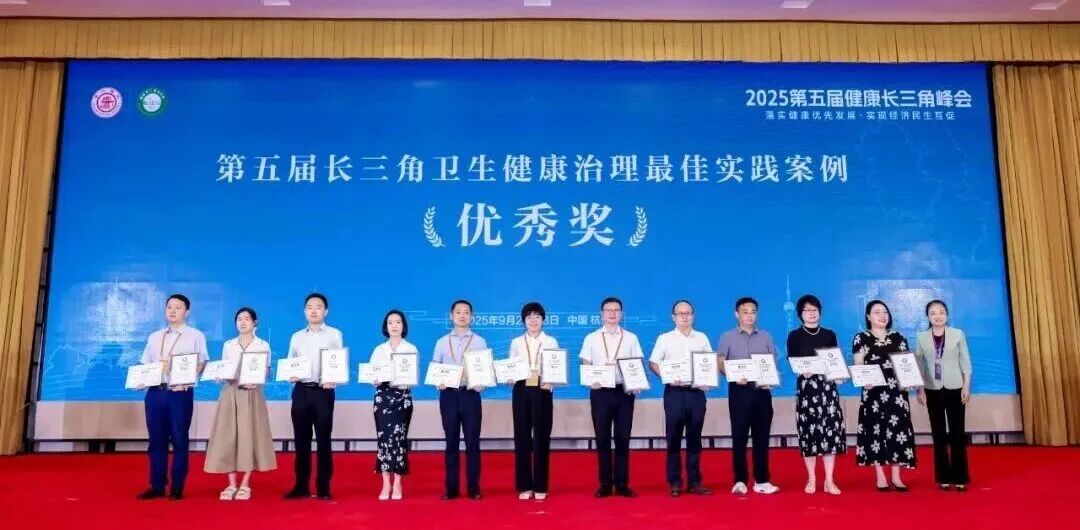
The 5th Yangtze River Delta Health Governance
Best Practice Cases - Excellence Award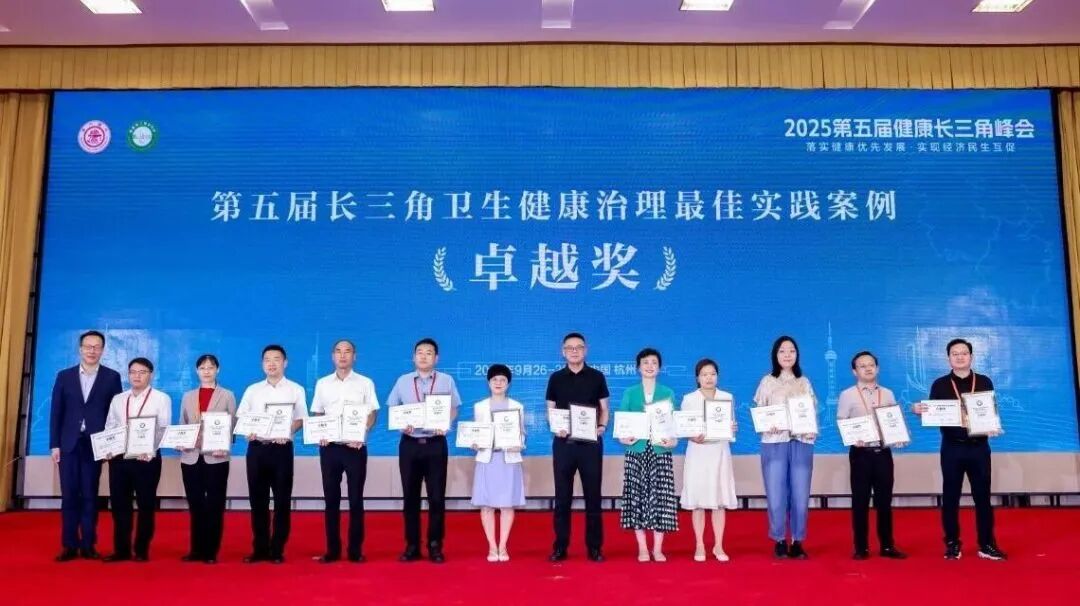
The 5th Yangtze River Delta Health Governance
Best Practice Case Excellence Award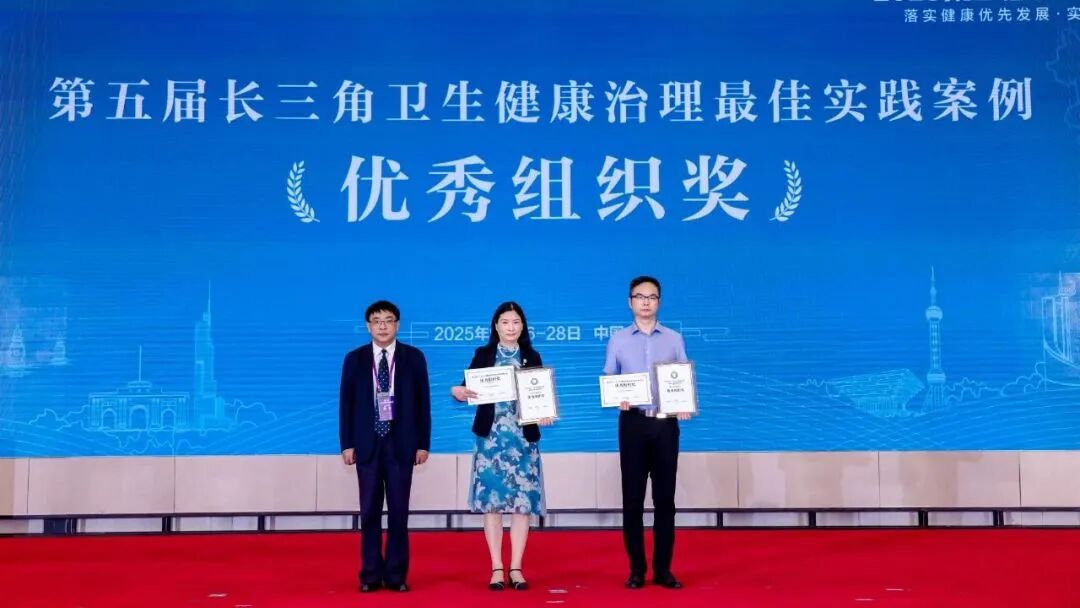
The 5th Yangtze River Delta Health Governance
Best Practice Cases - Outstanding Organization Award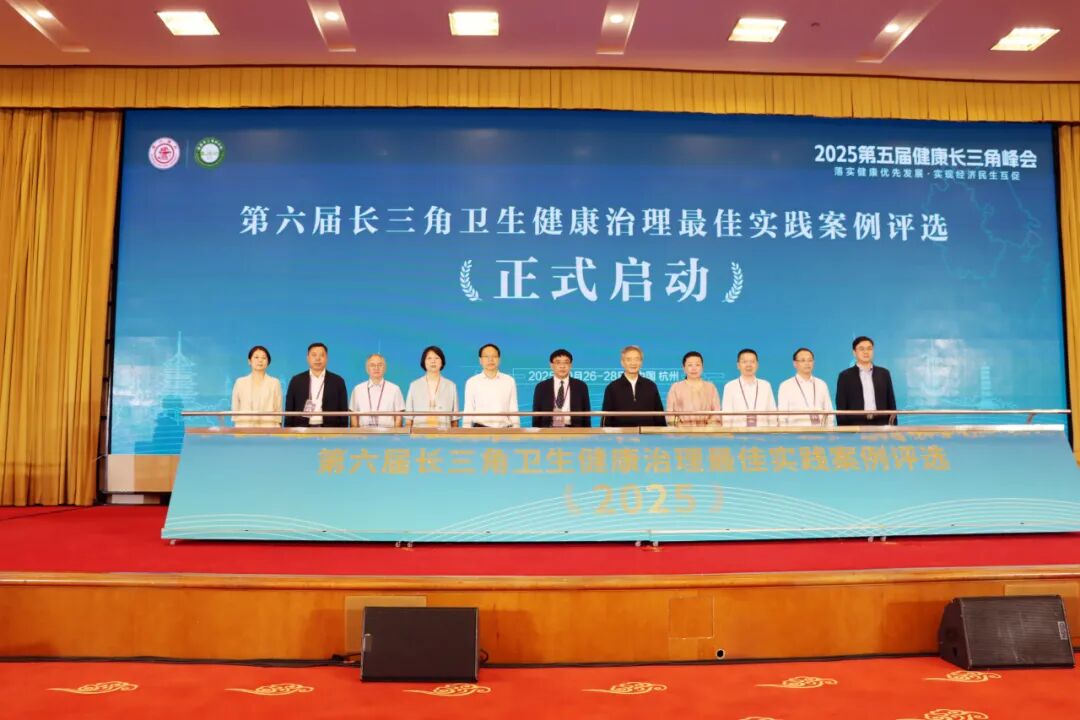
Launch ceremony of the 6th Yangtze River Delta Best Practices in Health Governance Case Selection
The results of the 5th Yangtze River Delta Best
Practices in Health Governance Case Selection were announced and awards were
presented at the summit, with 12 Excellence Awards, 11 Outstanding Awards, 12
Nomination Awards, and 2 Best Organization Awards being conferred. Meanwhile,
the 6th Yangtze River Delta Best Practices in Health Governance Case Selection
was officially launched at the summit. This selection initiative has been
successfully held for five consecutive sessions, identifying a series of
valuable and replicable health governance practice cases, and has generated
significant positive social impact.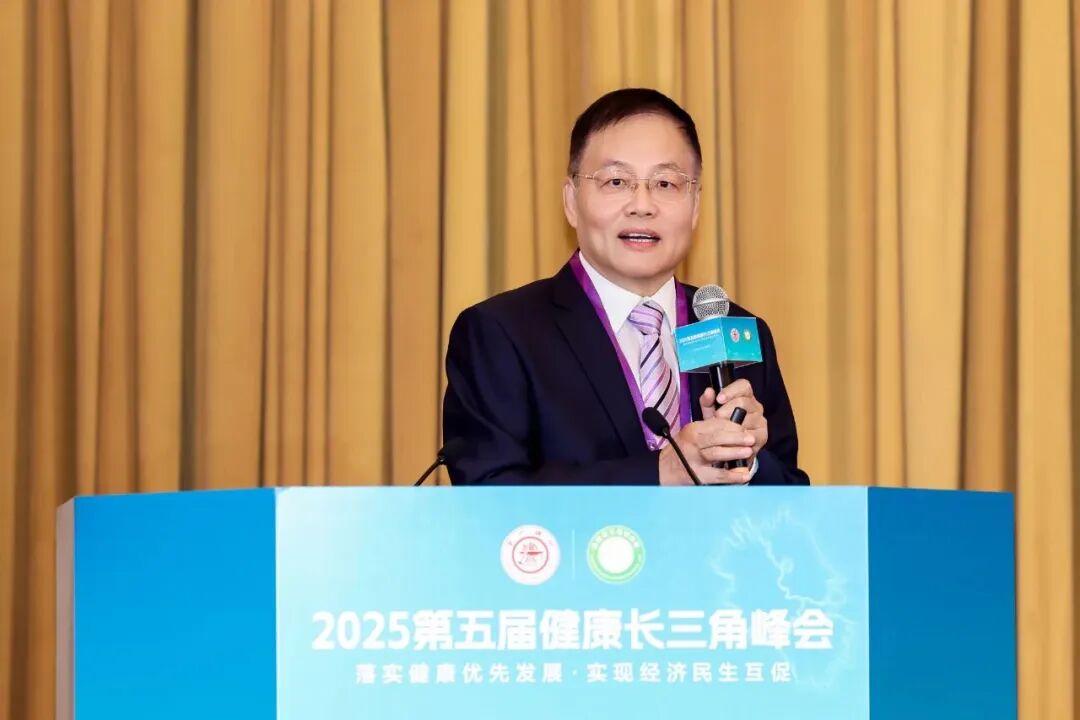
Keynote Speech by Jin Weijia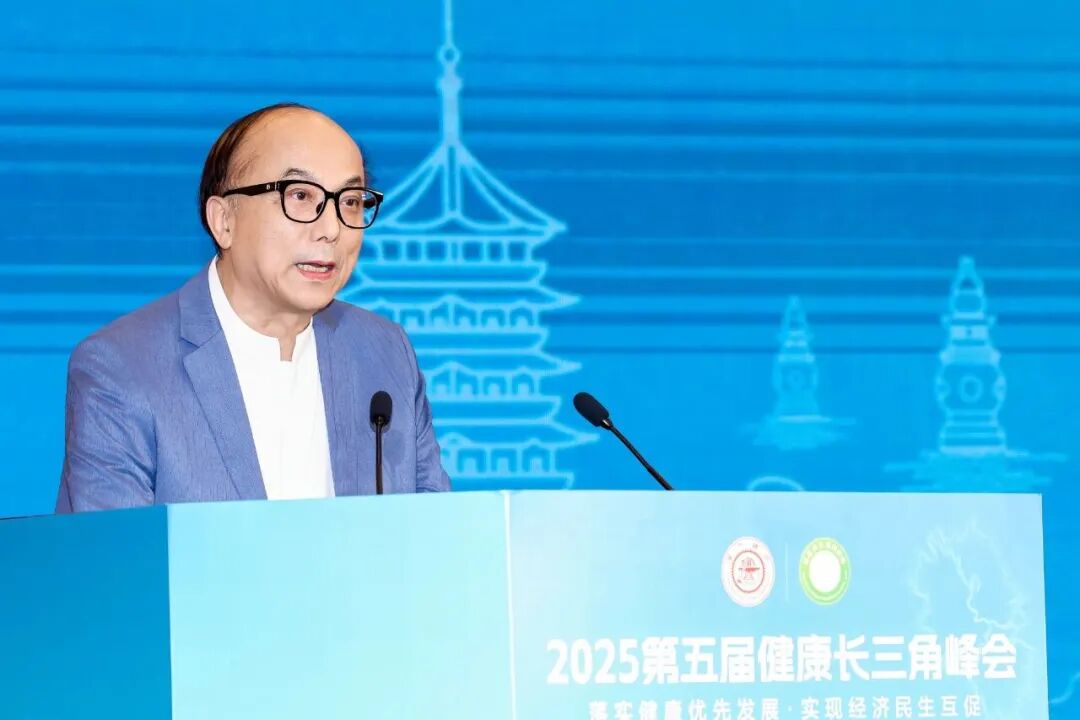
Keynote Speech by Zhang Hongyan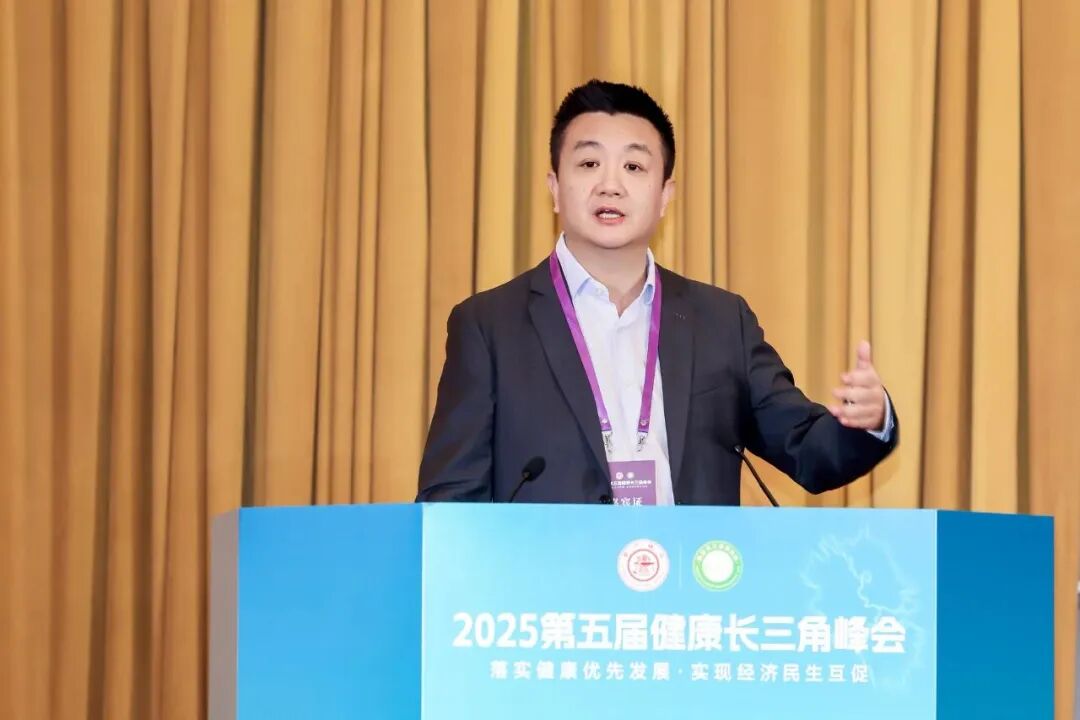
Keynote Speech by Hong Liang
Jin Weijia, Vice Director of the Science,
Education, Health and Sports Committee of Anhui Provincial CPPCC and former
Party Secretary and Director of Anhui Medical Insurance Bureau, Zhang Hongyan,
Dean of the Institute of Urban Science, Nanjing University, and Hong Liang,
Professor at the School of Physics and Astronomy and Institute of Natural
Sciences, Shanghai Jiao Tong University, delivered keynote speeches on "How
Medical Insurance Supports the Development of Medical Institutions",
"Theoretical and Practical Innovation in 'Creating a Healthy Society,'" and
"Protein Universal Large Model (VENUS) and Its Frontier Applications in the
Health Field", respectively, elaborating on the integrated innovation and
development of health and healthcare from different perspectives and
aspects.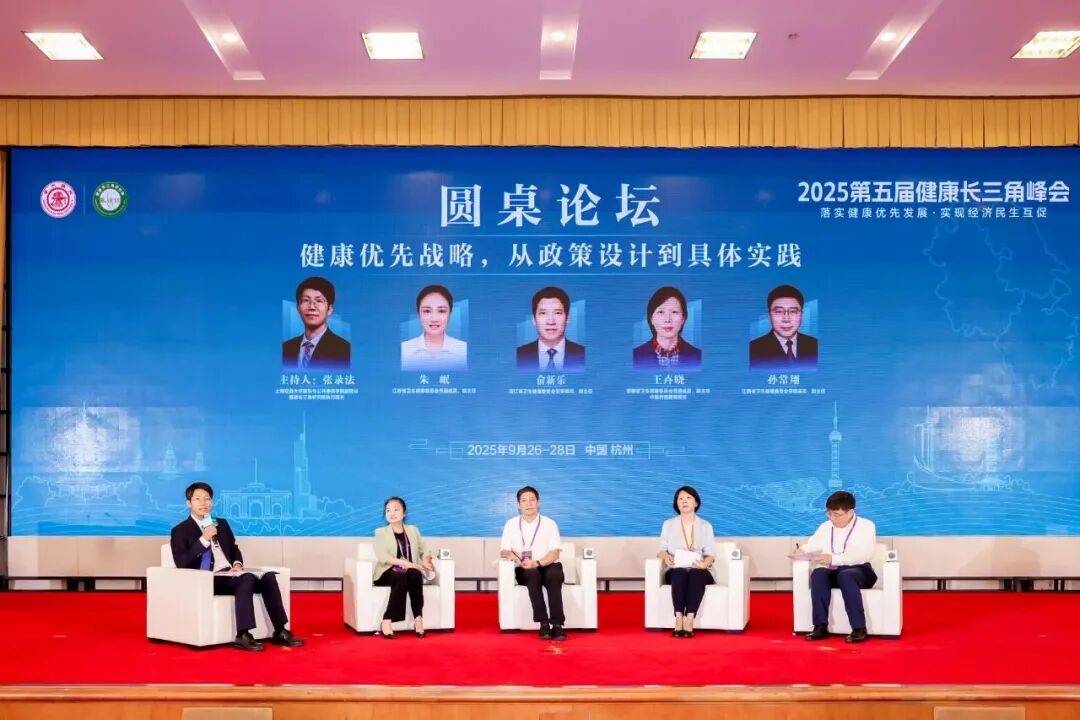
"Health-first Strategy: From Policy Design to Implementation" roundtable forum
The summit also featured two high-level
roundtable forums. One is the "Health-first Strategy: From Policy Design to
Implementation" forum, hosted by Zhang Lufa, Associate Dean of the School of
International and Public Affairs at Shanghai Jiao Tong University and Executive
Director of the Institute of Healthy Yangtze River Delta. Zhu Min, Deputy
Director of Jiangsu Commission of Health, Yu Xinle, Deputy Director of Health
Commission of Zhejiang Province, Wang Huixiao, Deputy Director of Health
Commission of Anhui Province and Director of Traditional Chinese Medicine
Administration, and Sun Changxiang, Deputy Director of Jiangxi Provincial Health
Commission, engaged in in-depth discussions on the important topic of
health-first strategy.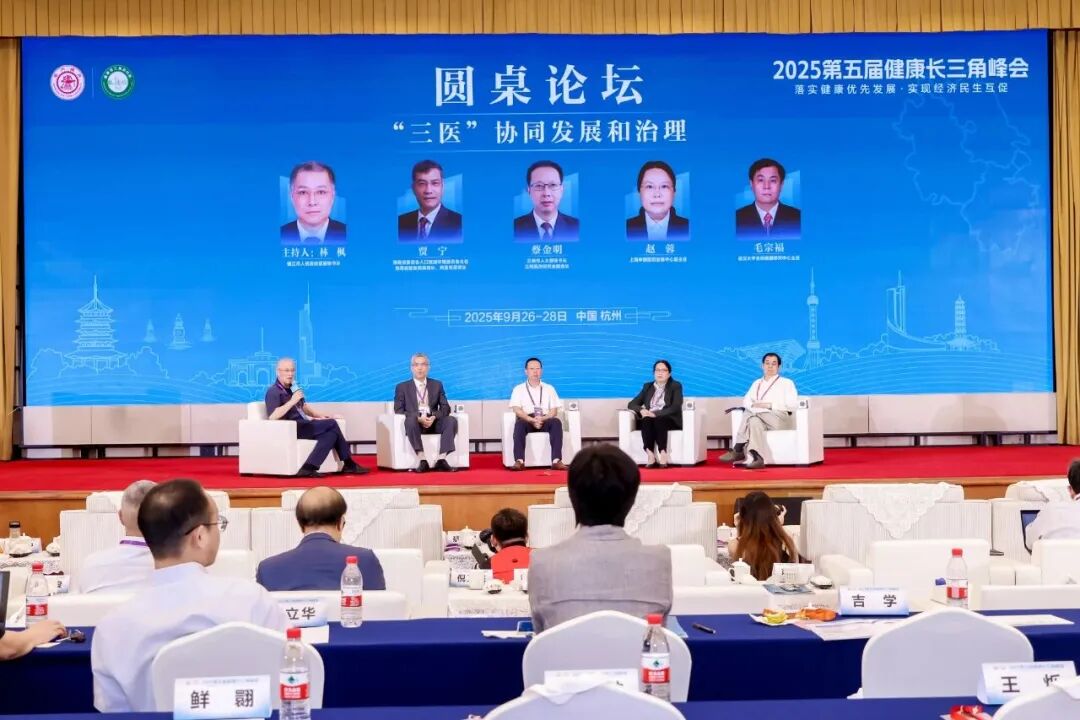
Coordinated Development and Governance of the "Tri-Medical Sectors" roundtable forum
The second is the "Coordinated Development and Governance of the 'Tri-Medical Sectors'" roundtable forum, moderated by Lin Feng, former Deputy Secretary-General of the Zhenjiang Municipal People's Government. Jia Ning, Director of the Committee on Population, Resources and Environment of the Hainan Provincial CPPCC, Cai Jinming, former Secretary-General of the Sanming Municipal People's Congress and Vice President of the Sanming Medical Reform Research Association, Zhao Rong, Deputy Director of the Shanghai Hospital Development Center, and Mao Zongfu, Director of the Global Health Institute of Wuhan University, engaged in in-depth exchanges and discussions on this topic from the perspectives of talent development, integration of medical care and disease prevention, urban characteristics, and inter-regional cooperation, respectively.
On September 26, the Institute of Healthy Yangtze River Delta convened a strategic advisory meeting. On the afternoon of September 27 and September 28, the summit concurrently held 6 thematic forums and 7 specialized forums, featuring exchanges and discussions on the "15th Five-Year" development plan for Healthy China, high-quality development of public hospitals, digital intelligent health, digitally intelligent cross-regional hierarchical diagnosis and treatment, digitally intelligent chronic disease management, and medical large language model applications.
This summit closely adheres to the theme of "Implementing Health-first Development and Achieving Mutual Promotion Between Economy and People's Livelihood". Through policy discussions, practical exchanges, and cross-sector dialogues, it seeks to explore possible pathways for the mutual advancement and synergistic progress of health-first and economic and social well-being. The consensus and outcomes reached at the summit are expected to provide valuable insights for enhancing new quality productive forces in the health sector across various regions, helping localities establish a virtuous cycle of mutually reinforcing economic development and livelihood improvement under the new circumstances.
Changier Think Tank 2.0 was launched during the summit
This summit brings together policymakers, academic leaders, industry elites, and representatives from social organizations across the Yangtze River Delta region and the entire nation to jointly chart a blueprint for healthy, high-quality integrated regional development. The summit aims to promote deep integration of technology, industry, society, and culture, providing a regional model for China's "Healthy China" strategy. The core theme of this summit is to promote a profound paradigm shift: elevating "health" from merely a medical and healthcare sector to a core strategy that drives economic and social development, creating a virtuous cycle between health initiatives and improved economic well-being. Health is not only the foundation of people's livelihood, but also the path to building a strong nation and an important component of new quality productive forces. Health in All Policies must become an intrinsic pillar and a powerful driver of high-quality economic development.
Under the grand blueprint of "comprehensive
health" at this summit, a profound consensus is becoming increasingly clear: the
healthy development of a region depends not only on the advancement of medical
technology and industrial prosperity, but is more fundamentally rooted in the
vitality of society and the flourishing growth of the next generation. It is
against this backdrop that, as an important component of the summit, the
"Changier Think Tank 2.0 Launch Ceremony and Special Forum" was held
concurrently. Luo Fuhe, Vice Chairman of the 12th CPPCC and former First Vice
Chairman of the Central Committee of the China Association for Promoting
Democracy, met with key representatives from Beijing Changier Education
Foundation and Changier Think Tank 2.0 before the meeting and took a
commemorative group photo.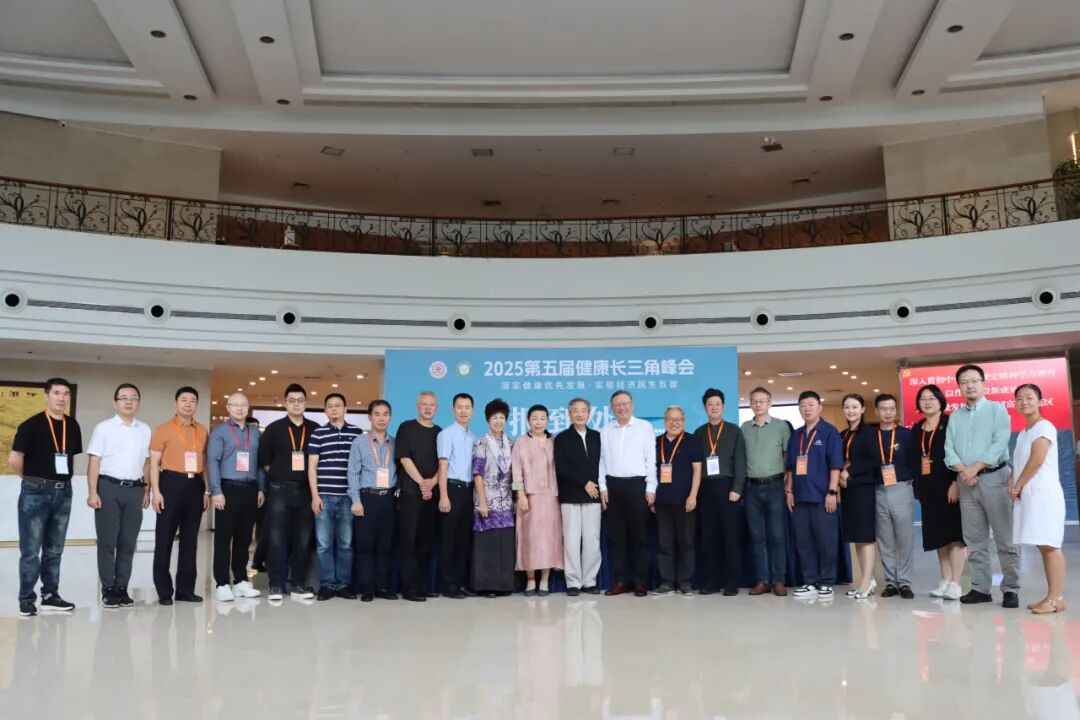
The 4th Changier Think Tank Forum and Changier Think Tank 2.0 Public Welfare Salon, held during the 5th Yangtze River Delta Health Summit, focused on the foundational forces of social innovation and engaged in in-depth discussions around the core themes of "new ecology, new public welfare, new business, new education, and new civilization". It sparked deep resonance and lively discussions among the attendees. The forum announced that APEPCY will comprehensively transition from the traditional "project-driven" model to a new "ecology-driven" paradigm that explores and pioneers "connection, symbiosis, and creation" with "maternal love wisdom civilization" as its philosophical cornerstone, committed to becoming a value engine and super connector for China's social innovation.
Background and Original Intention: From
"Firefighters" to "Engineers" - Twenty Years of Practical Experience by
Changier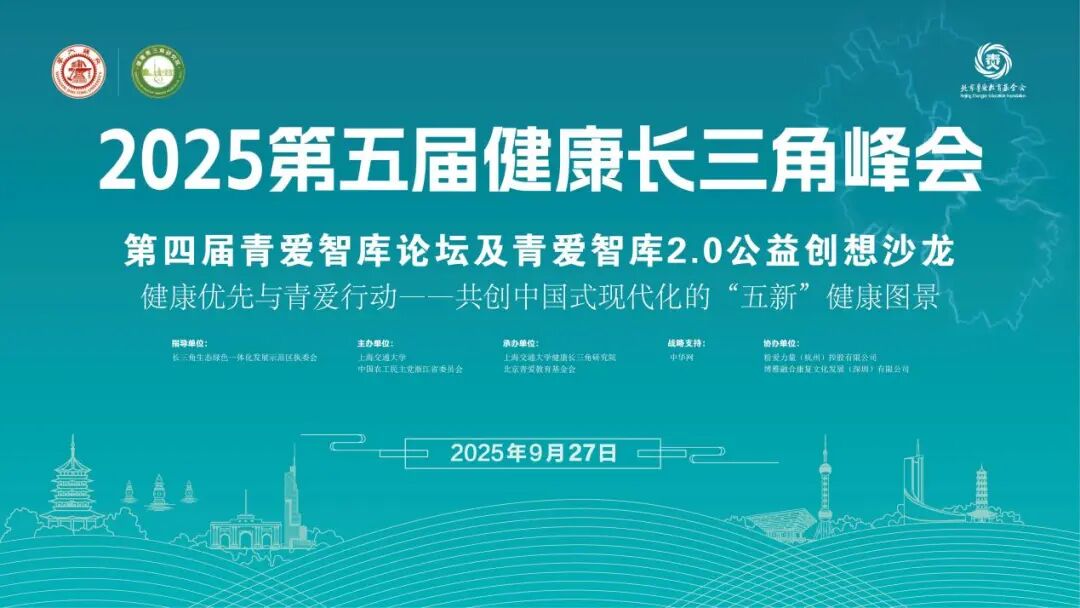
"Twenty years ago, when we addressed the issues of AIDS prevention, sex education, and mental health for adolescents, we faced resource scarcity and conceptual barriers," Ms. Zhang Yinjun, founder and President of Beijing Changier Education Foundation, reflected with deep emotion in her opening remarks. She pointed out that APEPCY started as a grassroots public welfare project and has developed into a 5A-level foundation with special consultative status with the United Nations Economic and Social Council, always keeping pace with the pulse of China's socioeconomic development.
President Zhang Yinjun emphasized that the role of APEPCY is undergoing a profound transformation: evolving from a "fire brigade" that addresses social problems to an "engineer" that builds future civilization. "For nearly 20 years, we have operated like a rescue team, but we aspire to become engineers building the civilization of the future," she explained, adding that as issues such as depression and anxiety among young people become increasingly prominent, simply providing relief is far from adequate. Therefore, APEPCY launched the "Maternal Love Project", which advocates for enhancing mothers' qualities, wisdom, and capacity for love, starting from the family as the smallest social unit, to nurture the next generation with physical and mental health and a sense of social responsibility. This marks that APEPCY's thinking has evolved from the 1.0 charity of "giving a man a fish" to a new stage of public welfare that "creates a fishing ground ecosystem". The launch of "Changier Think Tank 2.0" is precisely designed to provide theoretical support, strategic planning, and practical pathways for this grand vision.
Value Setting: Transcending Knowledge
Civilization, Advancing toward the Third Form of "Maternal Love
Civilization"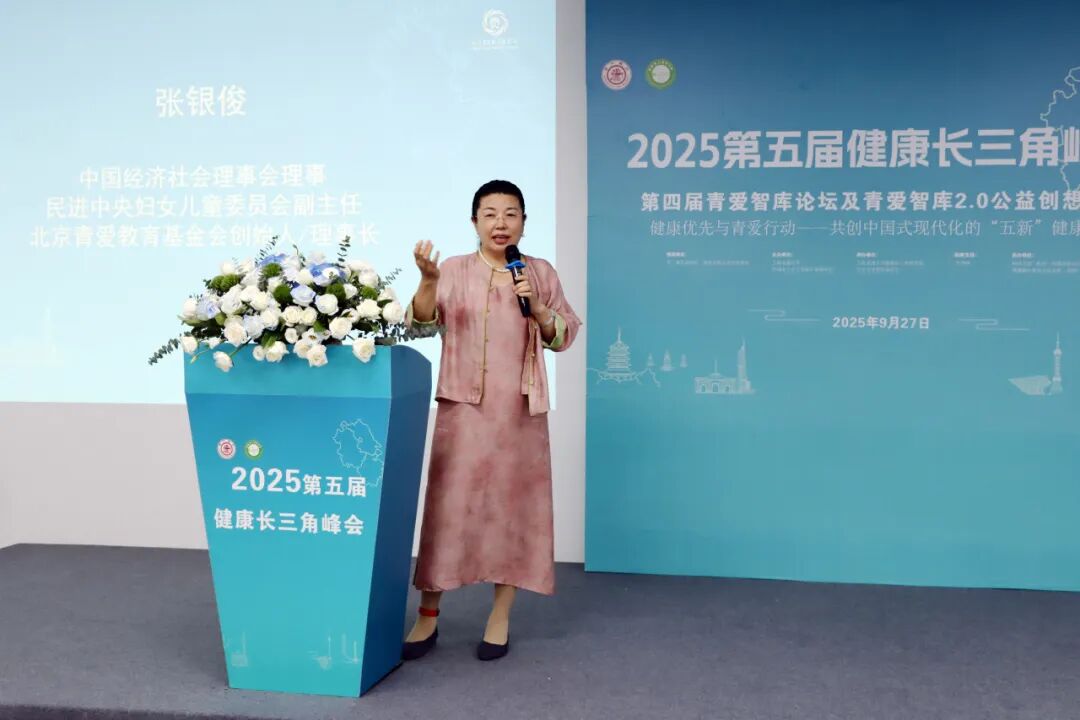
Zhang Yinjun, Founder/President of Beijing Changier Education Foundation
Mr. Gao Shuqun, Honorary President of Beijing
Changier Education Foundation, former Executive Secretary-General of Nishan
Forum on World Civilizations, and Strategic Advisor of China's APEPCY, has
provided a high-level philosophical foundation for the development of Think Tank
2.0. He proposed the theory of "the third state of civilization", offering a
fresh perspective for understanding the underlying logic of the current global
crisis and Chinese-style modernization.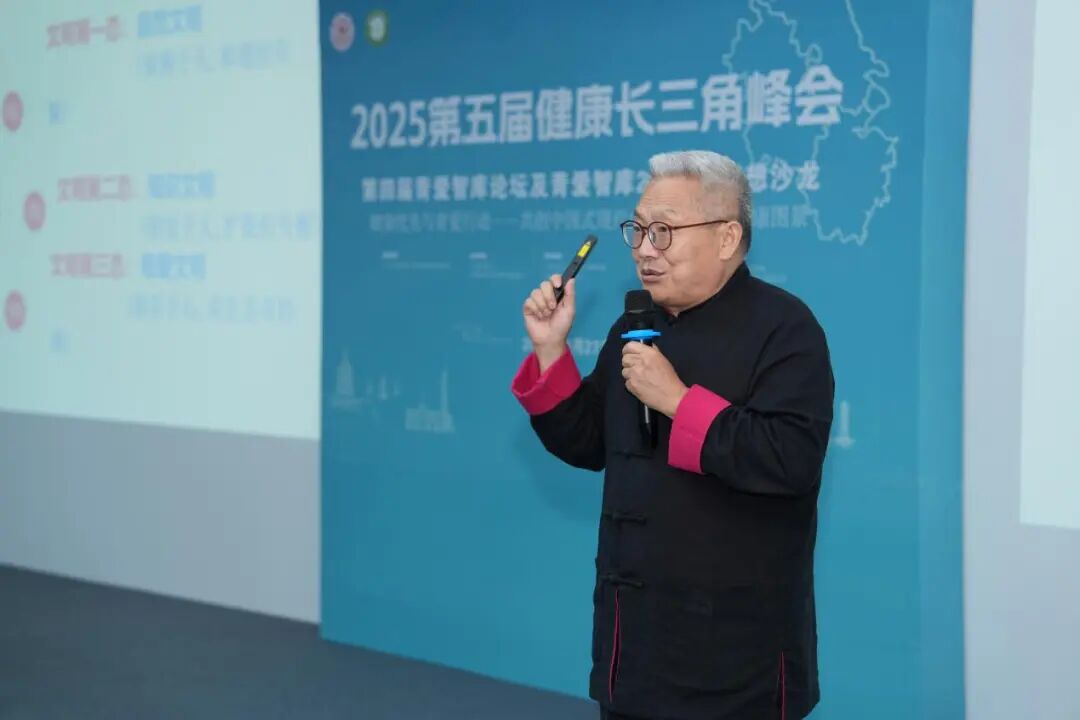
Honorary President of Beijing Changier Education Foundation, Gao Shuqun
Mr. Gao Shuqun pointed out that human civilization has passed through two stages: natural civilization characterized by "the unity of heaven and humanity" (the first stage) and knowledge civilization marked by "knowledge is power" (the second stage). The latter, while bringing tremendous material progress, has also led to ecological crises, spiritual desolation, and global developmental imbalances due to its inherent expansionism, instrumental rationality, and logic of conquest. "The world stands at a crossroads of transformation. Should we repair the second-stage civilization, or pioneer the third-stage civilization?" Mr. Gao Shuqun raised this profound question about our era. He believes that what has been nurtured through 20 years of APEPCY practice is precisely a brand new civilizational paradigm, maternal love civilization (the third stage). It stems from the qualities of maternal love, emphasizing inclusiveness, nurturing, connection, integration, and sustainability. He mentioned: "Building a community with a shared future for mankind is precisely the ultimate vision of maternal love civilization on a global scale." This theory not only elevates Changier's mission from mere social service to the level of participating in and promoting civilizational development.
Strategic Blueprint: From "Project" to
"Platform Ecosystem" - The Self-Iteration of Changier Think Tank 2.0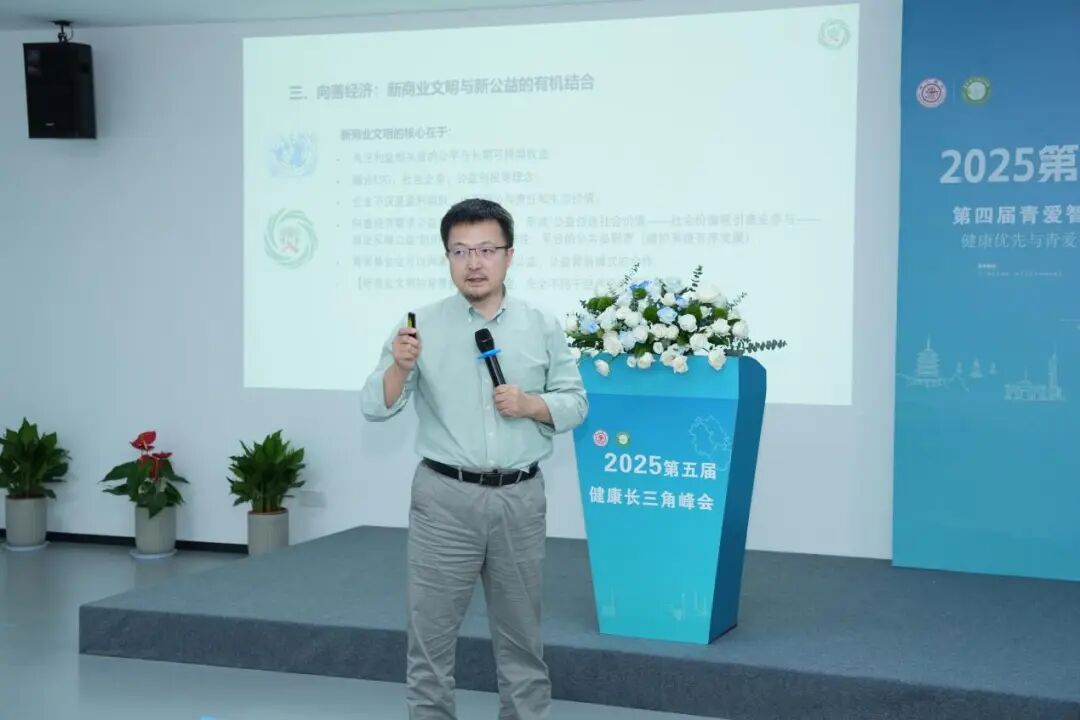
Ci Feng, Joint Secretary-General of Changier Think Tank 2.0 and Editor-in-Chief of China.com
Mr. Ci Feng, Joint Secretary-General of Changier Think Tank 2.0 and Editor-in-Chief of China.com, delivered a speech that drew upon the history of Beijing Changier Education Foundation to propose a clear strategic plan for the development of Changier Think Tank 2.0, with its core being the model iteration from "project-driven" to "ecosystem-driven". He pointed out that in the future, Changier will no longer be an isolated institution, but rather an open, connected, and symbiotic ecological platform. He vividly likened it to a "super router for social innovation" and a "value incubator", empowering all public welfare participants through three core capabilities: "connection, symbiosis, and creation".
He proposed an innovative "double helix driving model": one helix represents bottom-up practical exploration, drawing from real data and experience from frontline projects such as Changier Huts and Maternal Love Academy; the other helix represents top-down policy advocacy, transforming practical wisdom into policy recommendations, industry standards, and even international discourse through think tanks. These two spirals intertwine and mutually reinforce each other, creating a powerful endogenous driving force for development.
Our goal is to become China's most influential civil society think tank alliance dedicated to public welfare. Cifeng stated that Think Tank 2.0 will bring together government, enterprises, academia, media, capital, and other stakeholders to jointly launch the "Ecosystem Partner Co-creation Plan". This initiative will foster deep collaboration in areas including joint project applications, public welfare technology product development, ESG project co-construction, and impact investment, truly embodying the principle that "unity makes strength".
Real-World Concerns and Future Pathways:
Addressing Youth Challenges Through "New Ecology, New Education"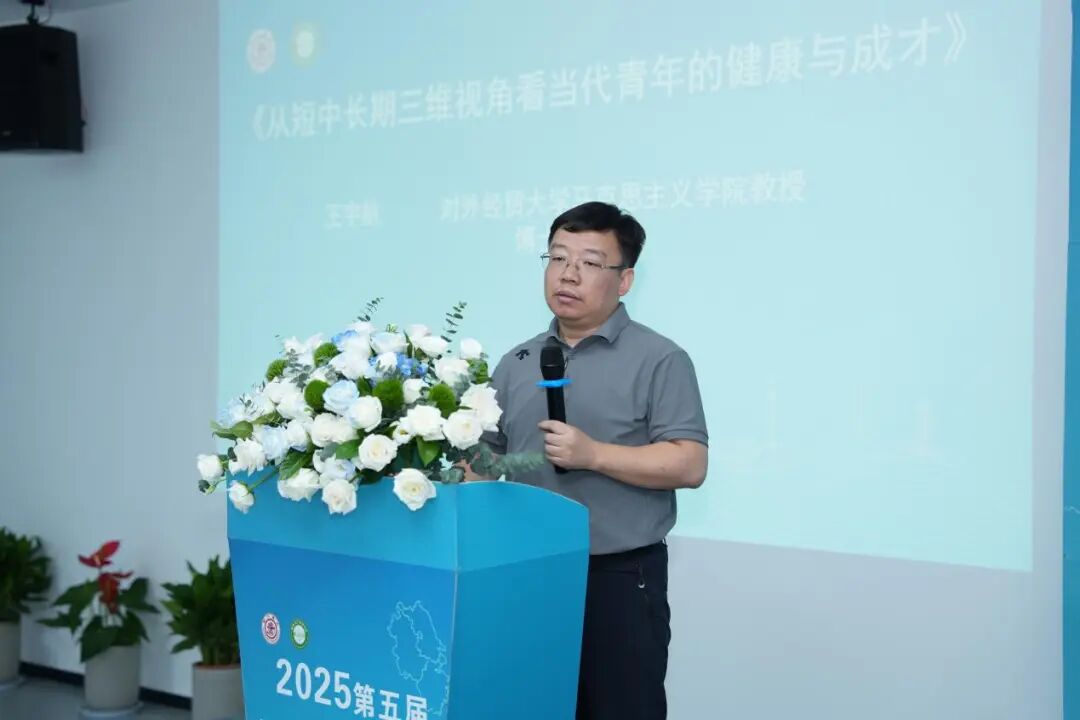
Professor and Doctoral Supervisor Wang Yuhang, School of Marxism, University of International Business and Economics
Theory and strategy must ultimately be grounded in addressing real-world social problems. The speeches by Professor Wang Yuhang from the University of International Business and Economics and Dr. Liu Baoli from the Beijing Changier Education Foundation precisely depicted the severe challenges currently facing adolescents and confirmed the urgency of establishing a "new ecology, new education".
Professor Wang Yuhang, with his keen
observation, analyzed the "three states of being lost" among young people in the
digital age: low spirits, distracted eyes, and confusion in social interactions.
He pointed out that the widespread adoption of online learning has weakened
community interaction, leading to the absence of "education of love"; economic
structural adjustments have brought unprecedented employment anxiety; and their
identity as "digital natives" has made them face the profound crisis of being
swept away by information flows and losing their agency. "A campus with fifteen
to sixteen thousand people is actually so quiet, which is terrifying!" President
Zhang Yinjun exclaimed after listening.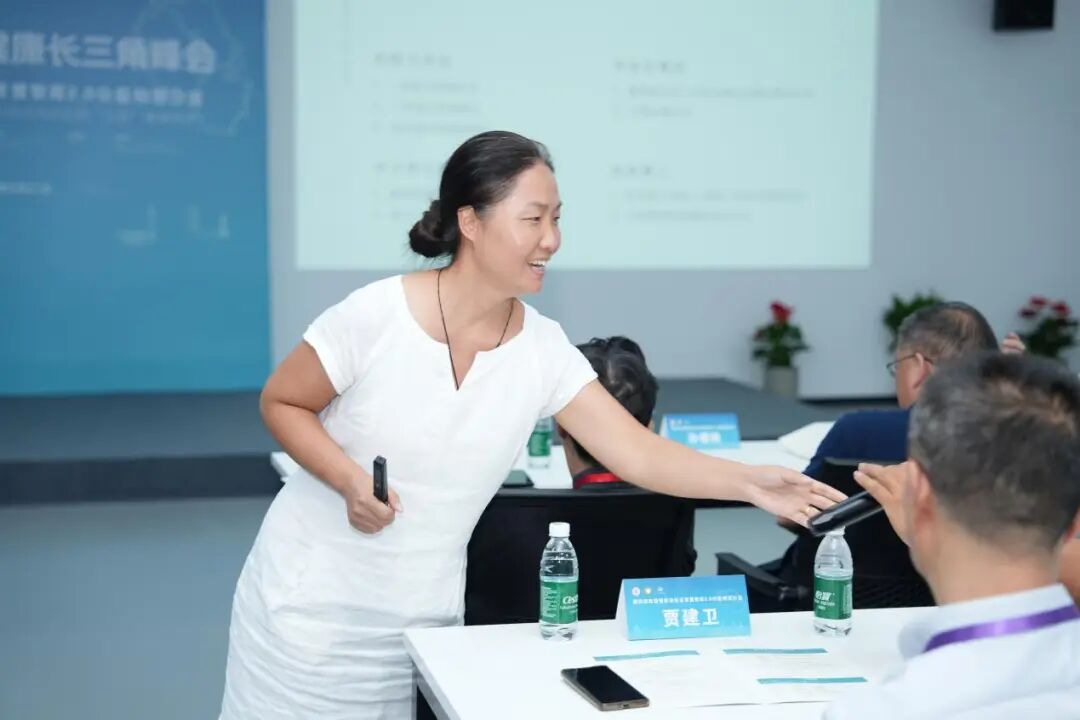
Liu Baoli, Director of the Education Research Department, Beijing Changier Education Foundation
Dr. Liu Baoli used the metaphor of a "lost compass" to highlight the issue of "overly narrow definitions of excellence" in the current education system, and for the first time systematically articulated Changier's "new ecology, new education" philosophy. She emphasized that education should no longer be an isolated endeavor confined to schools, but must instead foster an educational community that integrates families, schools, society, and enterprises. In this ecosystem, "maternal love education" will serve as the core, fostering children's holistic development; vocational education and holistic education will be re-examined to respond to demographic dividend changes; science and aesthetics will be cultivated in tandem, nourishing children's minds and souls.
The insights of these two scholars profoundly reveal from a practical perspective why an educational revolution that transcends "knowledge transmission" is necessary, and also point the way for Changier Think Tank 2.0 to translate the "maternal love civilization" concept into concrete educational solutions.
Co-creation and Vision: Making Love Resonate with Purpose, Uniting All Forces into Light
This forum is not only a collision of ideas, but also a call to action. From pioneers in the health industry developing rare ginsenosides from ginseng, to charitable live streaming platforms committed to "supporting charity through commerce"; from cultural scholars preserving thousand-year-old pattern wisdom, to Taiwanese experts deeply engaged in life education... All attending guests shared profound insights from their respective professional fields. Mr. Zhang Xiang, Director of the Asset Management Committee of Beijing Changier Education Foundation, further proposed from the perspective of asset utility and sustainable circulation that charitable assets require comprehensive management and closed-loop asset operations to better empower "charity+" and achieve enhanced social innovation.
At the conclusion of the forum, the attending
guests stood beneath a digital banner reading "Connect·Symbiosis·Create" and
joined hands in a double helix gesture to jointly launch the "Changier Think
Tank 2.0 Ecosystem Partner Co-creation Plan", marking the opening of a brand new
chapter: Changier will no longer be merely a charitable organization that
receives donations, but will transform into an empowerment platform, inviting
every visionary individual to participate in this profound social innovation
movement.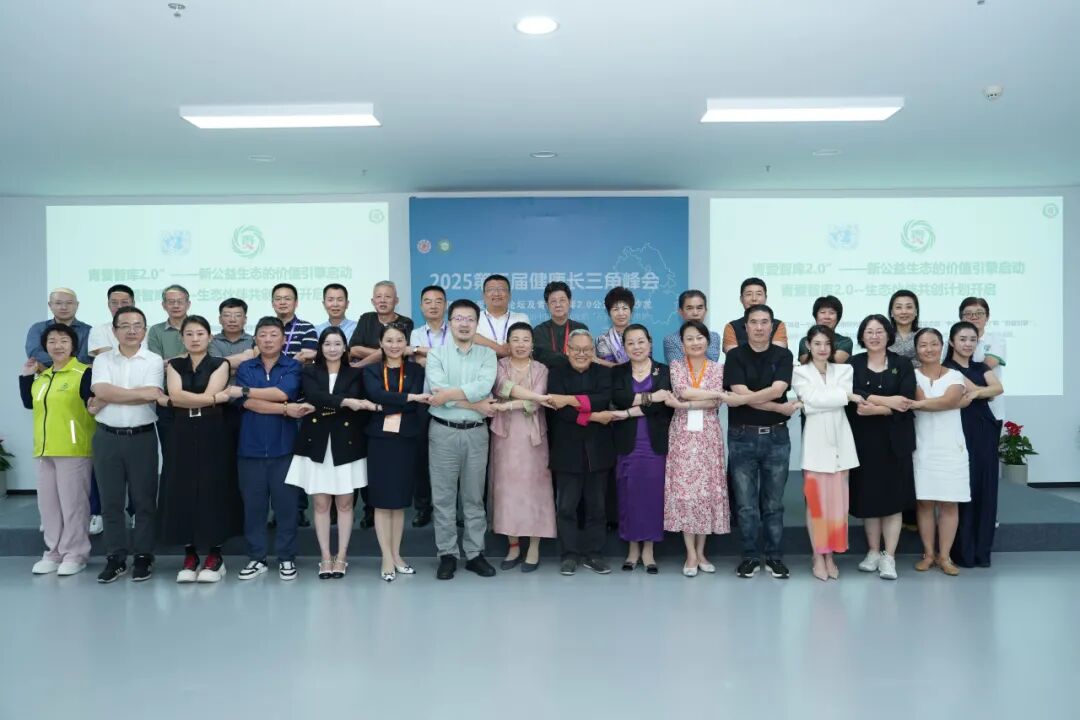
As President Zhang Yinjun said: "APEPCY is not the undertaking of a few people, but an undertaking that concerns the future of our nation and the happiness of families." The launch of "Changier Think Tank 2.0" represents a heartfelt invitation to society as a whole. Let's join forces, drawing upon the wisdom and strength of maternal love, beneath the blue skies of ecological civilization, to connect, coexist, and create a more resilient, compassionate, and sustainable future.
Appendix: Introduction to the Changier Think Tank
The Changier Think Tank was established in 2022. Jointly established by Beijing Changier Education Foundation, an NGO in Special Consultative Status of the United Nations Economic and Social Council, and the Institute of Healthy Yangtze River Delta, Shanghai Jiao Tong University, under the caring guidance of Mr. Yan Junqi, Vice Chairperson of the Standing Committee of the National People's Congress during the 11th and 12th terms, Chairman of the Central Committee of the China Association for Promoting Democracy, and Director of the Board of Directors of the Institute of Healthy Yangtze River Delta, Shanghai Jiao Tong University. The four Chinese characters "青爱智库" (Changier Think Tank) were personally inscribed by Mr. Yan Junqi. The original intention behind establishing the Changier Think Tank is to provide intellectual support by mobilizing domestic and international resources across multiple fields including environment, public welfare, health, and education. The think tank aligns with the United Nations Sustainable Development Goals and China's modernization initiatives, focusing on promoting the healthy physical and mental development of adolescents and protecting the rights and interests of women and children. Since its establishment, the Changier Think Tank has held the Changier Think Tank Forum annually in conjunction with the Yangtze River Delta Health Summit. Three sessions have been held to date, with the 4th session scheduled for September 2025. According to the plan, the Changier Think Tank will establish its headquarters across three locations: Beijing, Shanghai, and Shenzhen, leveraging the Beijing-Tianjin-Hebei region, the Yangtze River Delta, and the Greater Bay Area respectively; simultaneously, branch offices will be established in New York (North America), Paris (Europe), Kenya (Africa), and Rio de Janeiro (South America). The theme of the 4th Changier Think Tank Forum is "Health-first and Changier Action", with a focus on planning the 2.0 version of the Changier Think Tank and its mission around five major aspects: "new ecology, new public welfare, new business, new education, and new civilization".
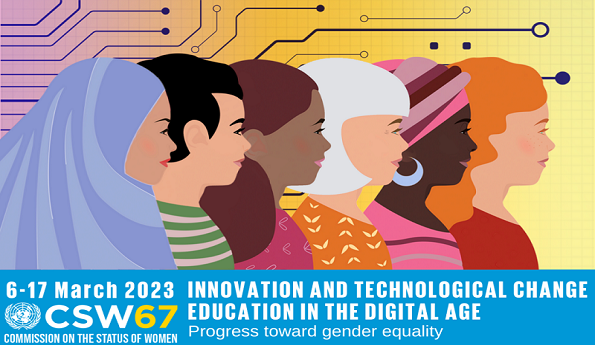
Themed on “Innovation and technological change, and education in the digital age for achieving gender equality and...
Mar 24, 2023 Read Details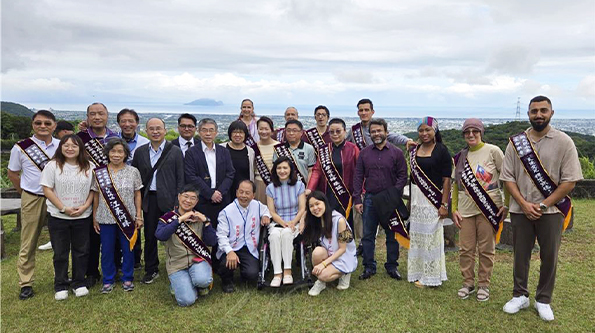
From September 20 to 28, 2024, the 27th Global Love of Lives Award Ceremony and related events organized by the Chou Ta-...
Oct 08, 2024 Read Details
Wish you good luck in the Year of the Dragon
Feb 10, 2024 Read Details


We reserve the right to correct and updateany content on this website without notice.
Introduction Articles of Association Organization Structure Milestones Rewards and Certificates Image Ambassadors Endowment Enterprises
Key Events Project News Media Report Announcement Partners Recent News

