


Public welfare hotline:+86-010-84404273
Email: apepcy@apepcy.org
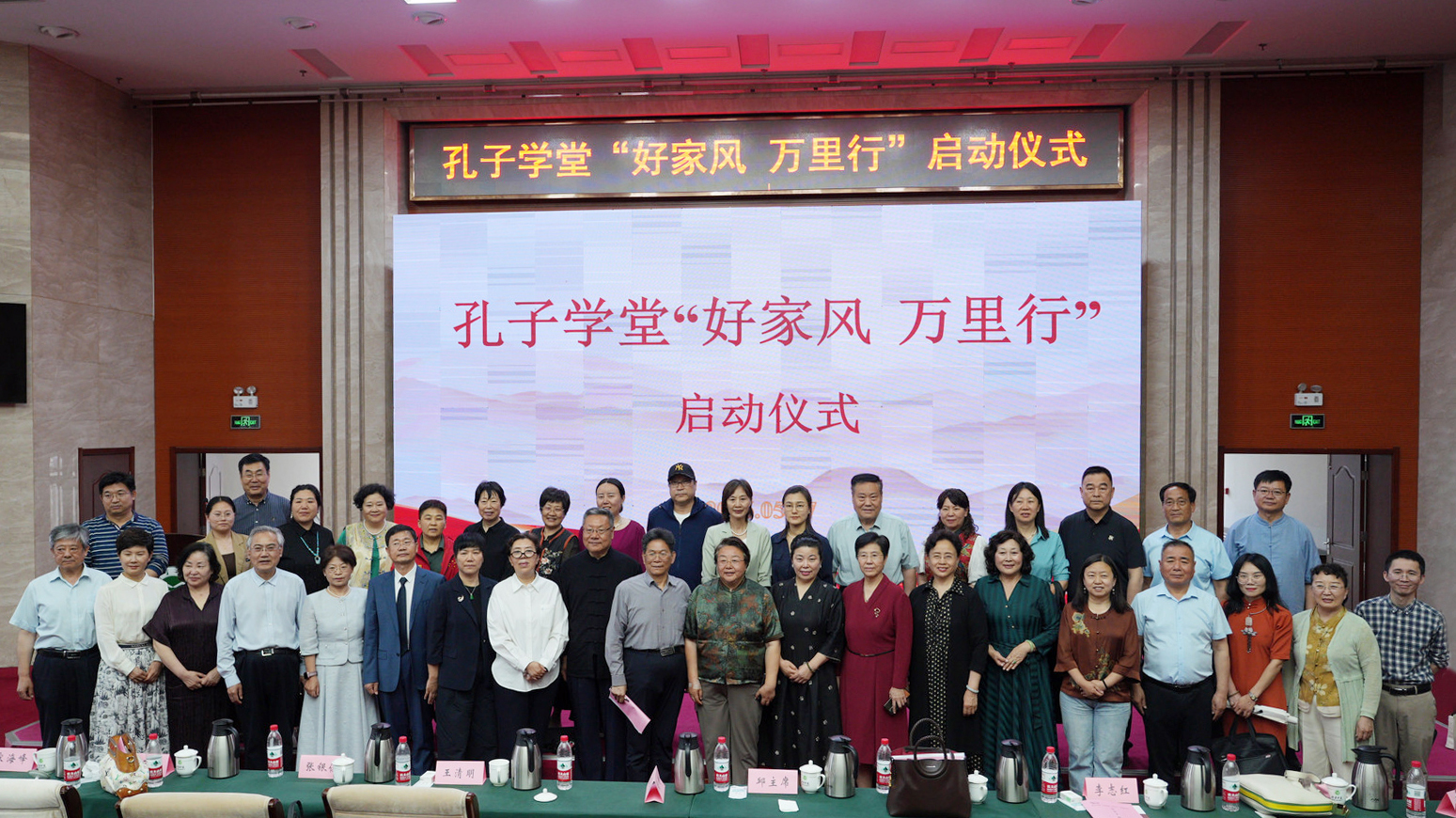
On May 17 to 18, Zhang Yinjun, President of the Beijing Changier Education Foundation, President-General of the Maternal Love Academy, and Founding President of the Nishan Maternal Love Academy, traveled to Qufu to attend the commemorative ceremony marking the 2,596th anniversary of the birth of Yan Zhengzai, the mother of Confucius (whose birthday falls on May 18), as well as the launch ceremony of the Confucius Classroom "Good Family Values Journey Across China" initiative. At the event, she delivered a speech titled "Two Mothers of Confucianism More Than Two Thousand Years Ago: How They Shaped the Confucian School of Thought and the Chinese Nation". Leaders and experts from the China Confucius Foundation, the Beijing Changier Education Foundation, the Yan Zi Culture Research Association of the Chinese Cultural Promotion Society, the Shandong Confucius and Mencius Culture Research and Exchange Center, Jining University, the Nishan Maternal Love Academy, and the Nishan Academy of Chinese Classics gathered together in the gentle rain to study Confucian classics, pay tribute to Yan Zhengzai, the great mother of ancient China who raised Confucius, and learn from the spirit of maternal love and education embodied by the Mother of Confucius (historically known as Mother Yan) in raising Confucius, and by the Mother of Mencius in raising Mencius.
Zhou Jing, Deputy Secretary-General of the China Confucius Foundation, attended and delivered a speech, expressing with deep feeling the patriotic sentiment of "mother and child sharing one heart" and outlining an inspiring vision for the joint development of the Maternal Love Academy and the Confucius Classroom. President Zhang Yinjun delivered an important speech, noting that the mothers of Confucius and Mencius were both great women of the Chinese nation and shining exemplars for mothers throughout the ages. They not only raised and guided China's "Supreme Sage" and "Second Sage" respectively, but also indirectly contributed to the greatness of Chinese culture and civilization. As such, they represent a vital spiritual source for strengthening the cultural cohesion of the Chinese nation and forging a strong sense of community for the Chinese people. She briefly recalled the unforgettable experience of her first visit to the Mother Yan's Shrine and her accompanying of Chinese and foreign women guests attending the inaugural Nishan World Women's Forum on a tour of the shrine. She then reported on the decade-long journey of promoting "Maternal Love Education" and bringing it to the world stage. Finally, she briefed the people of the hometown of Confucius and Mencius on the preparations for the "Confucius Commemoration Ceremony" to be held at Harvard University in October 2026 and the "Harvard Forum on the Culture of Confucius's Mother".
Li Zijun, Executive President of the Nishan Maternal Love Academy, shared her reflections on a decade of dedication to preserving the Shrine of Confucius's Mother and the world cultural heritage sites associated with Confucius and Mencius. She and others present called on society as a whole to promote the great spirit of maternal love embodied by the sacred mothers of Confucianism, and to pay greater attention to and participate in the protection of world cultural heritage and heritage education. Yan Tingjian, President of the Yan Zi Culture Research Association of the Chinese Cultural Promotion Society, along with experts, scholars, and representatives from the co-organizing institutions, presented flower baskets to the mother of Confucius in succession. Despite the heavy rain, the ceremony proceeded with solemnity and order, reflecting a profound reverence for the virtues of the ancient sage's mother.
This commemorative ceremony honoring the birth anniversary of Yan Zhengzai, the mother of Confucius, served as the inaugural event of the "Good Family Values Journey Across China" initiative under the China Confucius Foundation's Confucius Classroom project, with Qufu as its first stop. It represents an important practice in line with the directives of the Party Central Committee and the Shandong Provincial Committee on promoting China's outstanding family values culture and advancing the deep integration of traditional culture with the building of modern family civilization. It is reported that the "Good Family Values Journey Across China" initiative will expand from Qufu to the rest of the country, with the "Maternal Love Academy and Confucius Classroom" traveling alongside to contribute to the building of a socialist culture of good family values and new social norms.
Full text of President Zhang Yinjun's speech:
The Mothers of Confucius and Mencius: Their Legacy in Shaping Confucius, Mencius, and Chinese Civilization
Among the brightest stars in the intellectual firmament of China's five-thousand-year civilization, none shine more brilliantly than the twin luminaries of Confucius and Mencius. Together, they are known as "Confucius and Mencius", having jointly established the core tenets of Confucian thought and shaped the spiritual character of the Chinese nation. Yet as we look up to these two towering intellectual peaks, we must not forget who raised them and what forces shaped such great men. And what kind of environment nurtured such souls? The answer may be surprisingly simple: behind Confucius and Mencius each stood a great mother. Confucius's mother, Yan Zhengzai (historically known as Mother Yan), and Mencius's mother, Zhang, were ordinary women who shouldered extraordinary responsibilities. Through their maternal love and wisdom, they shaped Confucius and Mencius respectively, and through these two sages, indirectly molded the cultural DNA and spiritual character of the entire Chinese nation. It can be said that the two mothers of Confucianism shaped Confucius and Mencius, and that Confucius and Mencius in turn shaped Chinese civilization. Without these two mothers, there would have been no Confucian orthodoxy as we know it, and none of the cultural spirit of the Chinese nation that we understand today.
Yan Zhengzai, Mother of Confucius: Sowing the Seeds of Benevolence in Adversity
It is widely known that Confucius lost his father at the age of three and was raised by his mother, Yan Zhengzai. After the death of Confucius's father, Shuliang He, his mother Yan Zhengzai was left without support. Faced with such hardship, she made a resolute decision that would alter the course of history: she took the young Confucius and left their homeland, relocating to Queli in Qufu, the capital of the State of Lu.
This seemingly ordinary relocation not only changed the destiny of Confucius, but also indirectly altered the course of Chinese civilization and the Chinese nation.
The "single move" made by Confucius's mother may have appeared to be a mere geographical relocation, but it was in fact an act of strategic foresight. Qufu, the capital of the State of Lu and the fief of the Duke of Zhou, preserved the most complete ritual and musical culture of the Zhou dynasty, making it the foremost cultural center of the entire Eastern Zhou period. Yan Zhengzai willingly gave up whatever modest protection her family might have offered and chose to eke out a living in an unfamiliar city, with one single purpose: to place her son in fertile cultural soil. She may not have understood any theory of education, but her maternal instinct told her that the environment in which a child grows up has a fundamental influence on who that child becomes. This mirrors the wisdom later demonstrated by Mencius's mother, who moved house three times to secure the right environment for her son.
In the capital of the State of Lu, Yan Zhengzai eked out a meager living through needlework, weaving, and other handicrafts, enduring a life of extreme hardship. Yet material hardship never caused her to neglect her son's education. Records of the Historian: The Hereditary House of Confucius, in its chapter on the hereditary house of Confucius, preserves a telling detail: "As a child at play, Confucius would often arrange sacrificial vessels and practice ritual postures." Even as a young child, he showed no interest in ordinary games. Instead, he would regularly imitate ceremonial rites, handling ritual vessels and rehearsing the movements of proper conduct. Where did this knowledge come from? The only plausible answer lies in his mother's early guidance. Yan Zhengzai must have introduced her son to the meaning and practice of ritual in the course of their daily life together. Perhaps while sewing, she described to him the ceremonial scenes she knew; perhaps she fashioned crude ritual vessel models out of clay, allowing her son to experience the solemnity of rites through play. What a remarkably wise approach to education this was: no coercion, no lecturing, but rather weaving learning into play and planting culture into a child's heart.
Even more admirable was the way Yan Zhengzai, amid conditions of extreme hardship, set a moral example for Confucius through the very manner in which she lived her life. Raising her son alone, she endured loneliness and poverty, yet she never complained about her fate or allowed hardship to strip her of her kindness and dignity. Her warmth toward neighbors, her resilience in adversity, and her composure in the face of injustice fell upon Confucius's heart like a silent, gentle rain, nourishing it quietly and deeply. Confucius later wrote in The Analects of Confucius: "In my youth I was in humble circumstances, and so I became proficient in many menial tasks." Behind these understated words lies the bittersweet reality of a child from a single-parent family who shouldered life's burdens far too early, as well as the diligence and self-reliance instilled in him by his mother. When Confucius put forward the idea that "a gentleman remains steadfast even in poverty", and when he declared that "wealth and honor gained through unrighteous means are to me like floating clouds," the echo of his mother Yan Zhengzai's voice must surely have resonated within those words.
Yan Zhengzai's approach to education had no systematic theory behind it, yet it possessed the most essential core of all: love and respect. The love she gave Confucius was not indulgence, but an emotion with a clear sense of values. She taught her son that people should respect and care for one another, and that even when the world met him with pain, he should respond with grace. It was precisely this unconditional love and sense of security that Confucius received from his mother in childhood that laid the psychological foundation for his philosophy of "The Benevolent Person Loves Others", the idea that a person of benevolence loves others. When Confucius later put forward the Golden Rule, "What you do not want done to yourself, do not do to others", and the ideal of universal love, "overflow in love to all, and cultivate the friendship ofthe good", we can almost see the figure of Yan Zhengzai behind those words. She was the first to teach Confucius how to love others.
This is the understanding we have drawn from Confucius's mother, and it is the very spirit that now guides the Maternal Love education we are committed to. Maternal Love education has become one of the central initiatives of the Beijing Changier Education Foundation.
Tragically, Yan Zhengzai's life came to an end far too soon. She passed away in her early thirties when Confucius was just seventeen years old. Yet the spiritual seeds she had sown in Confucius had already taken root and begun to grow. This great mother gave her son not only life, but also a way of seeing the world, an attitude toward facing life, and the courage to pursue one's ideals.
Mencius's Mother, Lady Zhang: Forging the Backbone of a Great Man Through Change
If Confucius's mother sowed the seeds of benevolence amid hardship, then Mencius's mother forged resilience and resolve through constant change. Mencius's father died young, leaving mother and son to depend on each other alone. Like Confucius's mother, Mencius's mother faced the daunting challenge of raising a fatherless child on her own. Her greatness lay in her extraordinary sensitivity to the educational environment and her decisive capacity for action. The story of "Mencius's mother moved three times" has become a classic symbol in Chinese culture of the importance of environment in shaping a child's upbringing.
According to Liu Xiang's Biographies of Exemplary Women, when Mencius was young, his family initially lived near a cemetery. Seeing funeral processions and burials, young Mencius would imitate what he observed by playing games that mimicked funeral rites. Mencius's mother frowned at the sight and said, "This is no place for my child to grow up." She then made the decisive move to relocate, this time to a neighborhood near a marketplace. In the marketplace, young Mencius began imitating the cries of vendors and the back-and-forth of bargaining. Mencius's mother shook her head again and said, "This place is no fit home for my child either." She then moved once more, this time to a neighborhood beside a school. There, young Mencius was surrounded daily by the courteous conduct of scholars and the sound of students reading aloud, and he began to imitate the ceremonial bowing and etiquette he observed. Only then did Mencius's mother nod with satisfaction and say, "This is truly the right place for my child to grow up." And so the family settled there for good.
The story of "Mencius's mother moved three times" has endured through the ages not only because it vividly illustrates a mother's dedication to her child's education, but also because it reveals a profound educational truth: a child's mind is like a blank sheet of paper, and the impressions left by the environment will stay with that child for life. Rather than resorting to harsh scolding to stop Mencius from imitating funeral rites or street vendors, his mother chose to reshape his environment, subtly guiding the direction of his interests. This educational wisdom is a thousandfold superior to mere preaching! When Mencius later became a great Confucian master and put forward his theory of the innate goodness of human nature, declaring that "Humanity, righteousness, propriety, and wisdom are not drilled into us from outside. We originally have them with us. Only we do not think." it is not difficult to see that it was precisely the cultural environment his mother chose for him that awakened the seeds of goodness already present in his heart.
Mencius's mother did not limit her educational approach to choosing the right environment. She also knew when to offer her son stern yet enlightening guidance at critical moments. The story of "cutting the loom to teach her son" offers yet another illustration of this. One day when Mencius was a boy, he returned home from school to find his mother at the loom, weaving. She asked her son, "How are your studies coming along?" Mencius replied carelessly, "Same as always." Upon hearing this, his mother picked up a pair of scissors and cut the cloth she had been weaving clean in two. Mencius was startled and asked his mother why she had done such a thing. His mother replied, "Abandoning your studies is just like my cutting this cloth. All the work that went before is wasted." "A gentleman pursues learning in order to establish his name in the world, and he seeks knowledge through constant inquiry." "Only through perseverance can one achieve true scholarship and attain a life of peace and stability." "If you neglect your studies now, you will inevitably be condemned to menial labor in the future, and it will be difficult to escape misfortune." Deeply moved by his mother's words, Mencius threw himself into his studies with unwavering dedication, working day and night, and ultimately became one of the greatest Confucian masters after Confucius himself.
The story of "cutting the loom to teach her son" illustrates another hallmark of Mencius's mother's approach to education: she understood how to make her child grasp the consequences of his actions through vivid, impactful means, rather than through hollow lecturing. The act of cutting the cloth spoke far more powerfully than any number of admonitions to "study hard". Moreover, her guidance was not directed solely at academic achievement itself, but at the purpose and meaning behind learning, namely "establishing oneself" and "attaining a life of stability". She helped Mencius understand that learning was not merely a pursuit of personal fame and glory, but a means of finding one's place in society and securing a firm footing in a complex and ever-changing world. Such breadth of vision and depth of perspective were truly remarkable for a widowed mother raising her son alone.
Mencius's mother also demonstrated her influence over him through her respect for and support of his aspirations. According to historical records, after Mencius had grown up, he once fell into a state of confusion about his studies and wished to withdraw from school and return home. Rather than reproaching him, his mother patiently asked him to explain his reasons. Mencius said, "What I am learning seems to be of little use." His mother then offered him a lesson: just as cloth is woven thread by thread before it can become a full piece of fabric, knowledge must be accumulated bit by bit before one can truly develop. One must not abandon one's efforts halfway simply because of a moment of confusion. She encouraged Mencius to continue following the path of Confucius, and he ultimately achieved great things. It is fair to say that without Mencius's mother's foresight and perseverance, the "Second Sage" would never have come into being.
Two Mothers, One Legacy: From the Way of Confucius and Mencius to the Spirit of the Chinese Nation
Though living in different eras, the mother of Confucius and the mother of Mencius shared remarkably similar life trajectories: both were widowed early and raised their sons alone; both placed the utmost importance on education and excelled at nurturing their children's interests; and both set a model of personal character for their children through the way they lived their own lives. What deserves even deeper reflection is that these two mothers, through nurturing Confucius and Mencius, indirectly shaped the collective spiritual character of the Chinese nation.
At the heart of Confucius's thought is "ren" (benevolence), while at the heart of Mencius's thought is "yi" (righteousness). The benevolent person loves others; righteousness means rectifying oneself. Together, they form the two pillars of the Confucian moral system. The roots of both "benevolence" and "righteousness" can be traced back to the teachings of these two mothers. What Confucius's mother Yan Zhengzai gave him was unconditional love and respect, which led Confucius to believe in the inherent goodness of human nature and that people should be bound together by love. What Mencius's mother gave him was an unwavering commitment to righteousness and zero tolerance for slackness, which convinced Mencius that a true man of noble character must not be swayed by wealth and honor, shaken by poverty and hardship, or subdued by power and force. It can be said that the mother of Confucius taught the Chinese nation the virtue of "gentleness and sincerity", while the mother of Mencius taught it the virtue of "strength and uprightness". Together, these two virtues form a character uniquely Chinese in its harmony of strength and gentleness, blending the warmth of benevolence with the moral backbone of righteousness.
Looking further, the educational practices of Confucius's mother and Mencius's mother have themselves become an integral part of the educational thought of the Chinese nation. The educational principles they embodied, including an emphasis on environmental influence, respect for children's natural dispositions, leading by example, and making learning enjoyable, remain core principles in educational theory to this day. Throughout China's long history, maternal education and the culture of Maternal Love have always held a special place. The stories of "Confucius's mother enlightening her son" and "Mencius's mother moving three times" have been passed down through generations, becoming models emulated by countless families. This tradition of valuing early education and the role of maternal upbringing has enabled Chinese civilization to transmit its cultural heritage across generations within the family, the most fundamental unit of society. A nation's culture is ultimately carried forward by individual families and individual mothers. Confucius's mother and Mencius's mother stand as exemplars of this mode of cultural transmission.
More profoundly, the stories of Confucius's mother and Mencius's mother have shaped the ideal image of a "virtuous mother" in the hearts and minds of the Chinese people. In Chinese traditional culture, mothers are not only nurturers of life, but also moral enlighteners and transmitters of culture. From Confucius's mother and Mencius's mother in the pre-Qin era, to the later stories of Yue Fei's mother tattooing characters on his back and Ouyang Xiu's mother drawing on reed stalks to teach him, and then to the countless mothers of revolutionaries in modern times, the image of the "virtuous mother" has been passed down in an unbroken line, forming a unique spiritual resource of the Chinese nation. This tradition of the "virtuous mother" meant that, despite Chinese women's long history of occupying a subordinate position in society, they played an irreplaceable role in shaping culture within the private sphere of the family. Through the raising of their children, women across the generations participated in and shaped the course of Chinese civilization in a "hidden" way. This represents a historical dialectic unique to the Chinese nation: a group marginalized in the public sphere held, within the private sphere, a cultural power that shaped the future.
Today, as we speak of the revival of Chinese culture and the building of cultural confidence, we must not forget Confucius's mother and Mencius's mother. Through their maternal love and wisdom, they shaped Confucius and Mencius; through their thought and teachings, Confucius and Mencius shaped the Chinese nation. This is a cultural chain spanning two thousand five hundred years, and its starting point was two ordinary yet extraordinary women. They left behind little more than their names, and they held neither prominent status nor renown. Yet through their sons, their lives became woven into the very lifeblood of this nation and this world.
Confucius said, "Benevolence is the essence of humanity, and loving one's kin is its highest expression." Mencius said, "Extend the respect you show your own elders to the elders of others; extend the care you give your own children to the children of others." Behind these words lies a profound understanding of familial love as the very source of morality. And it is the mother who is the first to bestow this love of family upon us. Through their lives and actions, Confucius's mother and Mencius's mother demonstrated that a great mother can not only transform the destiny of a child, but through that child, shape the spiritual direction of an entire nation.
Today, we revisit the historical significance of Confucius's mother and Mencius's mother not simply to praise them as "mothers of sages," but to draw from their lives enduring wisdom about education, maternal love, and the transmission of culture. In an era where the definition of "success" grows ever narrower and the understanding of "education" ever more utilitarian, the stories of Confucius's mother and Mencius's mother remind us of enduring truths: true education is not the pursuit of grades and prestigious schools, but the cultivation of a child's well-rounded character and lofty aspirations; true maternal love is not control or indulgence, but respect and guidance; and true cultural transmission relies not on grand narratives or institutional compulsion, but on the daily example set within each family, day after day.
True maternal virtue lies not in power or prominence, but in a heart willing to give everything and overcome every hardship for one's child. It was with this very heart that Confucius's mother and Mencius's mother shaped Confucius and Mencius, and through them, shaped the Chinese nation. Their stories are the most moving opening chapter of Chinese culture and an enduring source of strength that has sustained this nation across the ages. Today, as mothers in every family continue to give quietly for their children's growth, let us remember: they are writing the future history of this nation. For every child may become the next Confucius or Mencius, and every mother may become the next mother of Confucius or Mencius. The unbroken continuity of Chinese civilization rests on this very foundation: the relay of maternal love and maternal teaching, passed down from generation to generation, never ceasing.
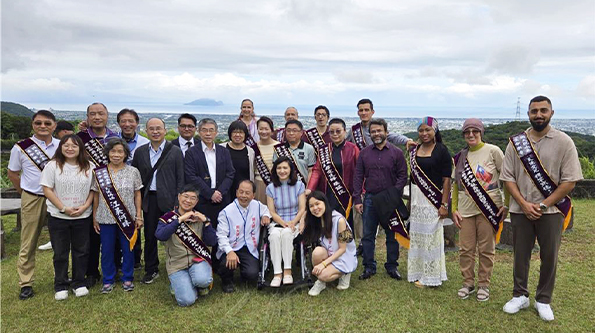
From September 20 to 28, 2024, the 27th Global Love of Lives Award Ceremony and related events organized by the Chou Ta-...
Oct 08, 2024 Read Details
Health experts are calling for sex education to be included in China’s school curriculum, saying the lack of forma...
Aug 10, 2016 Read Details
On May 13, 2025, a delegation from the Beijing Changier Education Foundation, along with the China NGO Network for Inter...
May 19, 2025 Read Details


We reserve the right to correct and updateany content on this website without notice.
Introduction Articles of Association Organization Structure Milestones Rewards and Certificates Image Ambassadors Endowment Enterprises
Key Events Project News Media Report Announcement Partners Recent News

