


Public welfare hotline:+86-010-84404273
Email: apepcy@apepcy.org
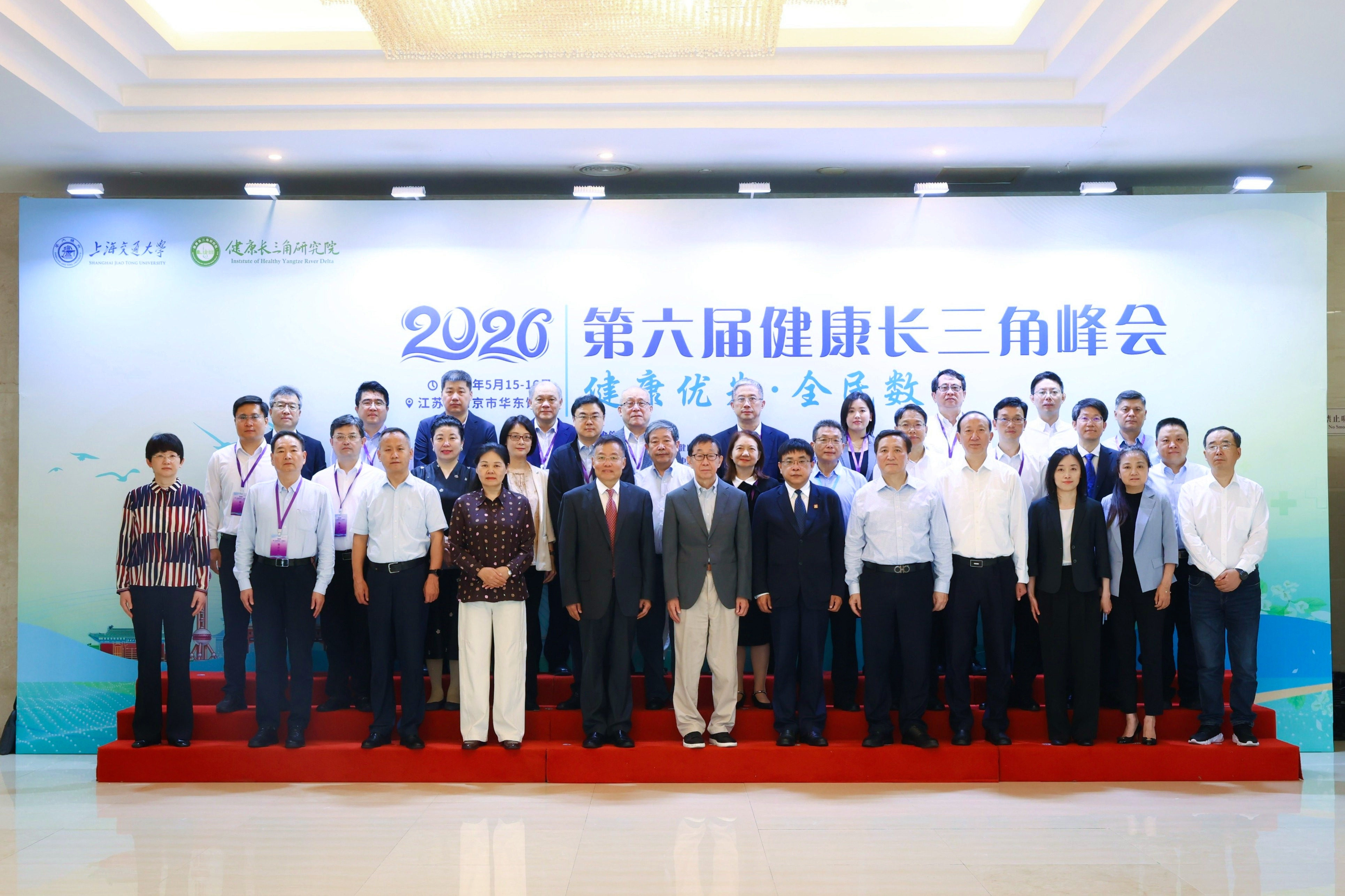
Group photo
The 6th Yangtze River Delta Health Summit was successfully held in Nanjing, Jiangsu Province, from May 15 to 16, 2026. Under the theme of "Health First, Digital Intelligence for All", the summit featured a main forum and six sub-forums, bringing together stakeholders from government, industry, academia, and research to address cutting-edge topics including medical, health insurance and pharmaceutical coordination, digital and intelligent health, proactive health management, and medical science and technology innovation. As a co-organizer of this year's summit, the Beijing Changier Education Foundation joined more than 400 guests and representatives from Jiangsu, Zhejiang, Shanghai, and Anhui.
High-level Remarks
In his address at the summit, Zhou Cheng, Deputy Secretary of the Party Committee of Shanghai Jiao Tong University, noted that the health-first development strategy and digital and intelligent transformation are becoming key drivers of integrated health development across the Yangtze River Delta, making this summit particularly timely. Shanghai Jiao Tong University will remain committed to serving national strategic needs and will continue to contribute its expertise to regional health governance.
Keynote Address by an Academician: Exploring New Frontiers in Pharmaceutical Research
One of the highlights of this year's summit was the keynote address delivered by Jiang Jiandong, Academician of the Chinese Academy of Engineering and President of the Institute of Materia Medica, Chinese Academy of Medical Sciences. In his keynote address titled "Exploring New Frontiers in Pharmaceutical Research: Revisiting Microorganisms", Academician Jiang systematically elaborated on the unique value of microorganisms and natural medicines in the development of China's original innovative drugs. He noted that over the past 200 years, global drug development has been dominated by Western countries, and that innovation pathways based on microorganisms and natural products represent a distinctive strength and competitive advantage for China's pharmaceutical research. Using berberine and other original drugs derived from natural products as examples, Academician Jiang elaborated in depth on the scientific significance of "revisiting microorganisms". He explained that this concept represents not merely a return to traditional research paradigms, but also an effort to uncover entirely new mechanisms, such as the interactions between drugs and the gut microbiome, thereby opening new pathways for treating major diseases. This forward-looking perspective resonated widely with the attendees.

Launch Ceremony of the 7th Yangtze River Delta Health Governance Best Practice Case Selection
Keynote Addresses: Policy and Digital Intelligence as Twin Drivers
Zhang Bingli, Deputy Director of the Population Culture and Primary Health Center of the National Health Commission, delivered a keynote address on "Empowering High-Quality Development of Primary Healthcare through Digital Intelligence", offering an in-depth analysis of how digital and intelligent technologies can effectively enhance the capacity of primary-level health services.
Wang Yuan, Deputy Director of the Institute of Social Development Research at the National Development and Reform Commission, delivered a keynote address on "Leveraging Digital Intelligence to Expand Quality Medical Resources and Promote Regionally Balanced Distribution", providing a systematic framework from a macro-policy perspective for advancing equitable access to health resources.
Roundtable Forums: Cross-Sector Dialogue on Health Governance
The summit featured two high-level roundtable forums. The first forum focused on "AI-Powered Actions in Health and Healthcare". Moderated by Lan Qing, Secretary of the Party Committee of Nanjing Medical University, it brought together heads of health authorities from Jiangsu, Anhui, Shanghai, and Zhejiang for an in-depth exchange on the practical applications of artificial intelligence in the health sector. The second forum focused on "Practical Pathways for Collaborative Innovation Among Medical Institutions, Universities, and Enterprises". It brought together representatives from healthcare institutions, universities, research institutes, and technology companies to explore viable approaches to advancing health innovation through cross-sector collaboration.
Working Together Toward a Healthier Yangtze River Delta
As a co-organizer, the Beijing Changier Education Foundation has always held that health is the foundation of education, and education is the guarantee of health. Taking this summit as an opportunity, the Foundation will continue to deepen its collaboration with governments, universities, medical institutions, and social organizations across the Yangtze River Delta region, sowing the seeds of health education in the hearts of more young people and making sustained philanthropic contributions to the development of the Healthy China Initiative.

Jakarta, April 6, 2025. Five days ago, love set out from here; five days later, love takes root here. Over the past f...
Apr 08, 2025 Read Details
On the afternoon of 27th April 2022, Zhang Yinjun, Chairman of Beijing Changier Education Foundation, attended online th...
Apr 28, 2022 Read Details
The Asian Civilization Dialogue Conference and Asian Civilization Week were grandly opened in Beijing on May 15th.
May 17, 2019 Read Details


We reserve the right to correct and updateany content on this website without notice.
Introduction Articles of Association Organization Structure Milestones Rewards and Certificates Image Ambassadors Endowment Enterprises
Key Events Project News Media Report Announcement Partners Recent News

