


Public welfare hotline:+86-010-84404273
Email: apepcy@apepcy.org
From March 16 to 18, 2026, Zhang Yinjun, President of Beijing Changier Education Foundation, led a delegation to Geneva, Switzerland, to attend the 61st Session of the United Nations Human Rights Council. At the Palais des Nations, representing China's civil society and philanthropic sector, the delegation delivered a clear and powerful statement on adolescent health education, AIDS prevention and treatment, and human rights protection.

Since Beijing Changier Education Foundation obtained special consultative status with the United Nations Economic and Social Council, this participation marks a new stage in Changier's deep engagement with the United Nations Human Rights Council—with the President personally leading the delegation, delivering speeches under two formal agenda items over two consecutive days, and attending a side event forum to present Changier's twenty years of practice and advocacy to the international community in a systematic and comprehensive manner.
Two decades twice over: The profound resonance of historical moments

This year marks the 20th anniversary of the United Nations Human Rights Council. In March 2006, the United Nations General Assembly adopted a resolution formally establishing the Human Rights Council, which became one of the most important multilateral forums for global human rights issues.
Also in 2006, Zhang Yinjun resigned from his government position, founded Changier, and launched the AIDS Prevention and Education Project for Chinese Youth (APEPCY), dedicating himself to public welfare with a simple yet unwavering conviction: to safeguard the dignity and future of every child through education.
Twenty years. Two parallel trajectories. They converged in Geneva in 2026.
The first voice: Speaking for the silent children in the great hall
On March 16, at the Assembly Hall of the Palais des Nations, the 61st session of the Human Rights Council officially commenced discussion of Agenda Item 4.
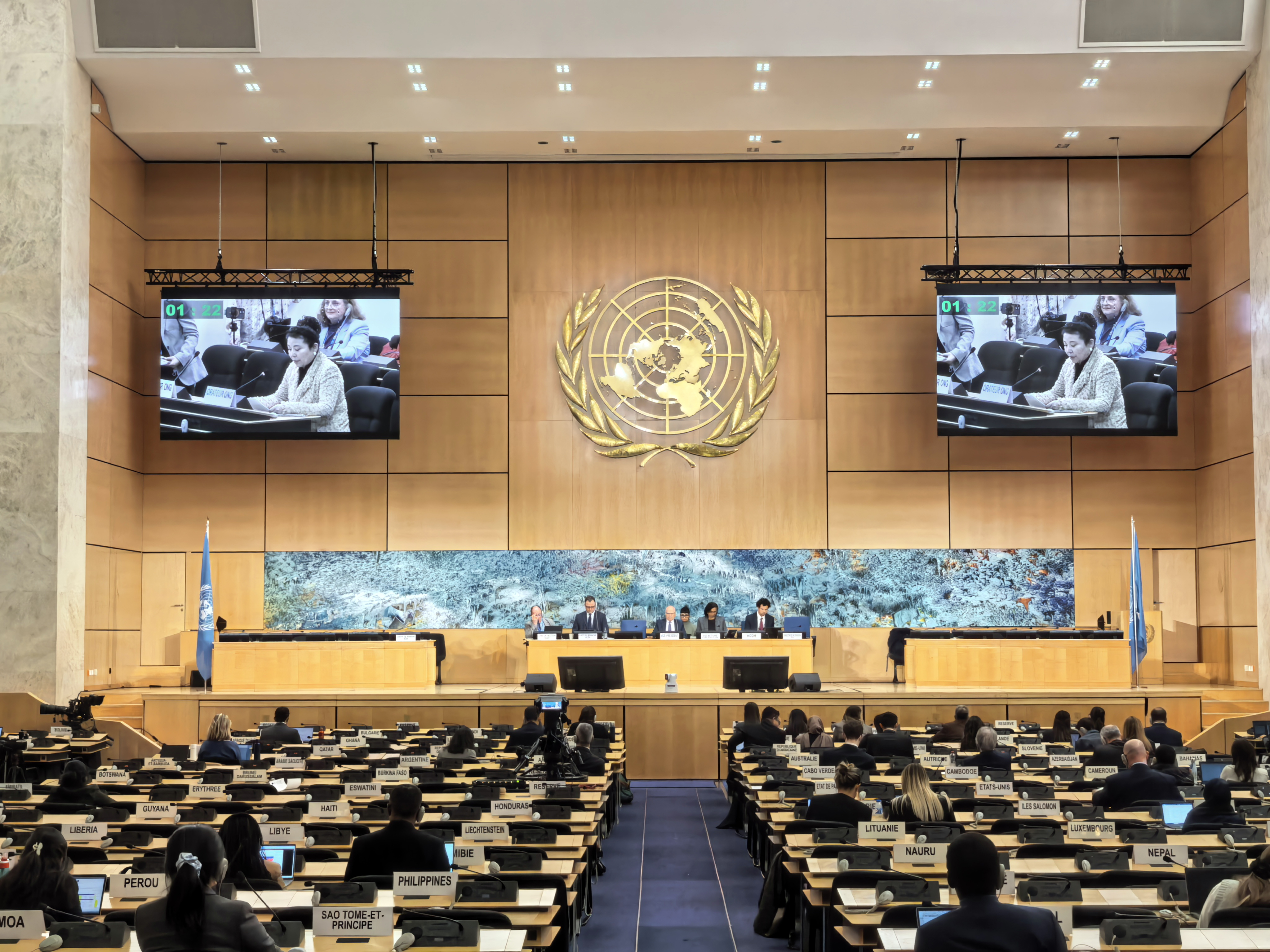
Zhang Yinjun, representing an NGO, took to the podium and delivered a speech in English to delegates from over one hundred countries worldwide.
She pointed out that in many countries, HIV/AIDS prevention, sex education, and mental health remain taboo subjects, leaving adolescents deprived of access to accurate information and undermining their health, dignity, and rights. "This silence is costing lives."

She introduced to the board that the Beijing Changier Education Foundation has been continuously advancing the AIDS Prevention and Education Project for Chinese Youth for twenty years, establishing Changier Huts and Maternal Love Academies throughout China, committed to transforming silence into dialogue. She specifically mentioned that China's first nationwide theatrical film focusing on adolescent HIV/AIDS prevention, initiated by the Beijing Changier Education Foundation, had over 3,800 public welfare screenings, marking a historic breakthrough, bringing a long-avoided topic into cinemas, reducing stigma, and opening up safe spaces for dialogue among families, schools, and communities.

She called on all Member States to:
· Recognize film and cultural engagement as legitimate tools for rights-based health education
· Support youth-centered platforms and reduce stigma
· Invest in school-community collaboration mechanisms to translate awareness into sustained preventive action
"Breaking taboos starts with conversation. Saving lives starts with education."
The second voice: Back to the podium, championing youth rights
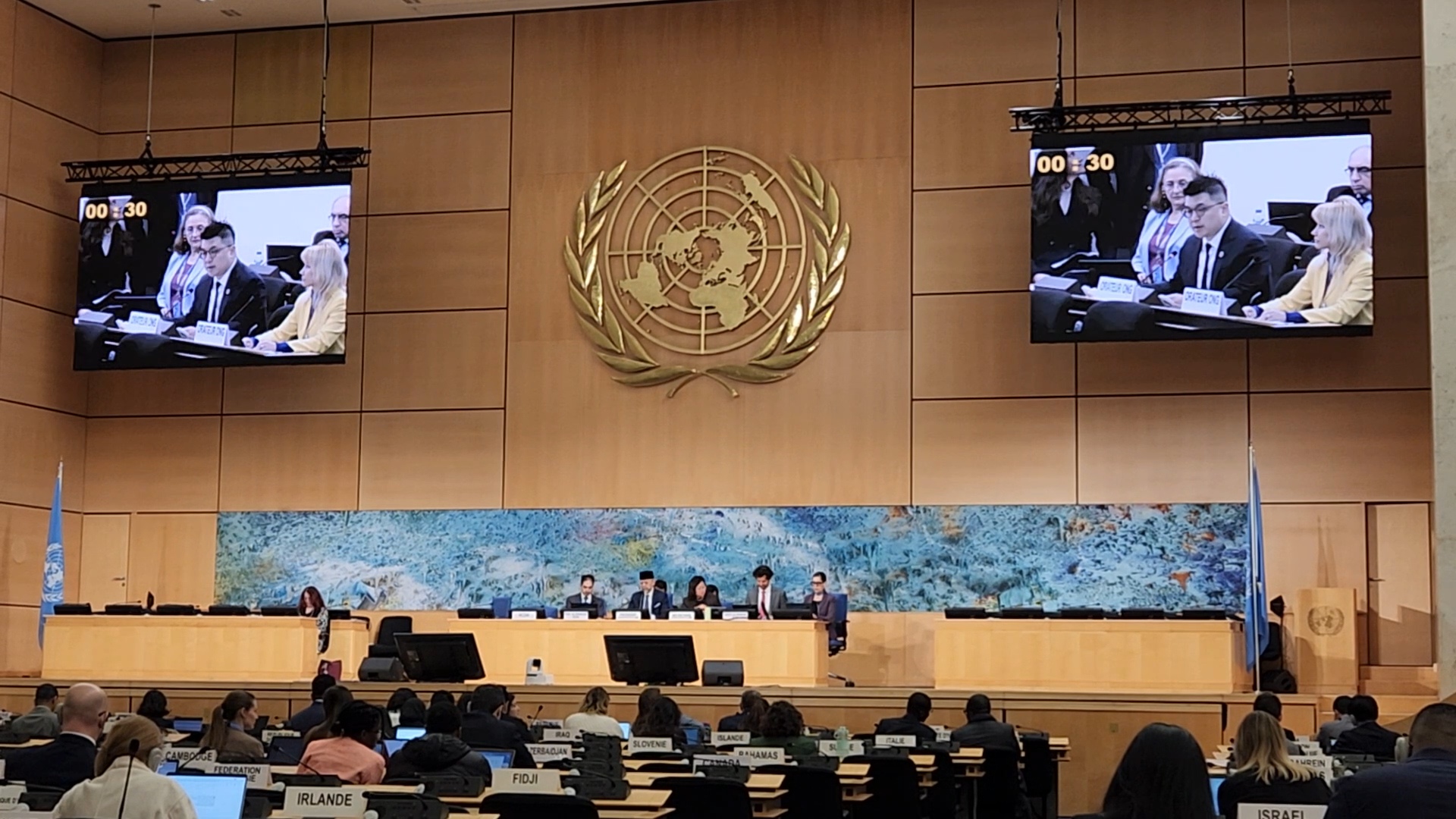
On March 18, during the discussion of Agenda Item 5 at the Human Rights Council, Zhang Xiang, representative of the Beijing Changier Education Foundation, took the floor once again.
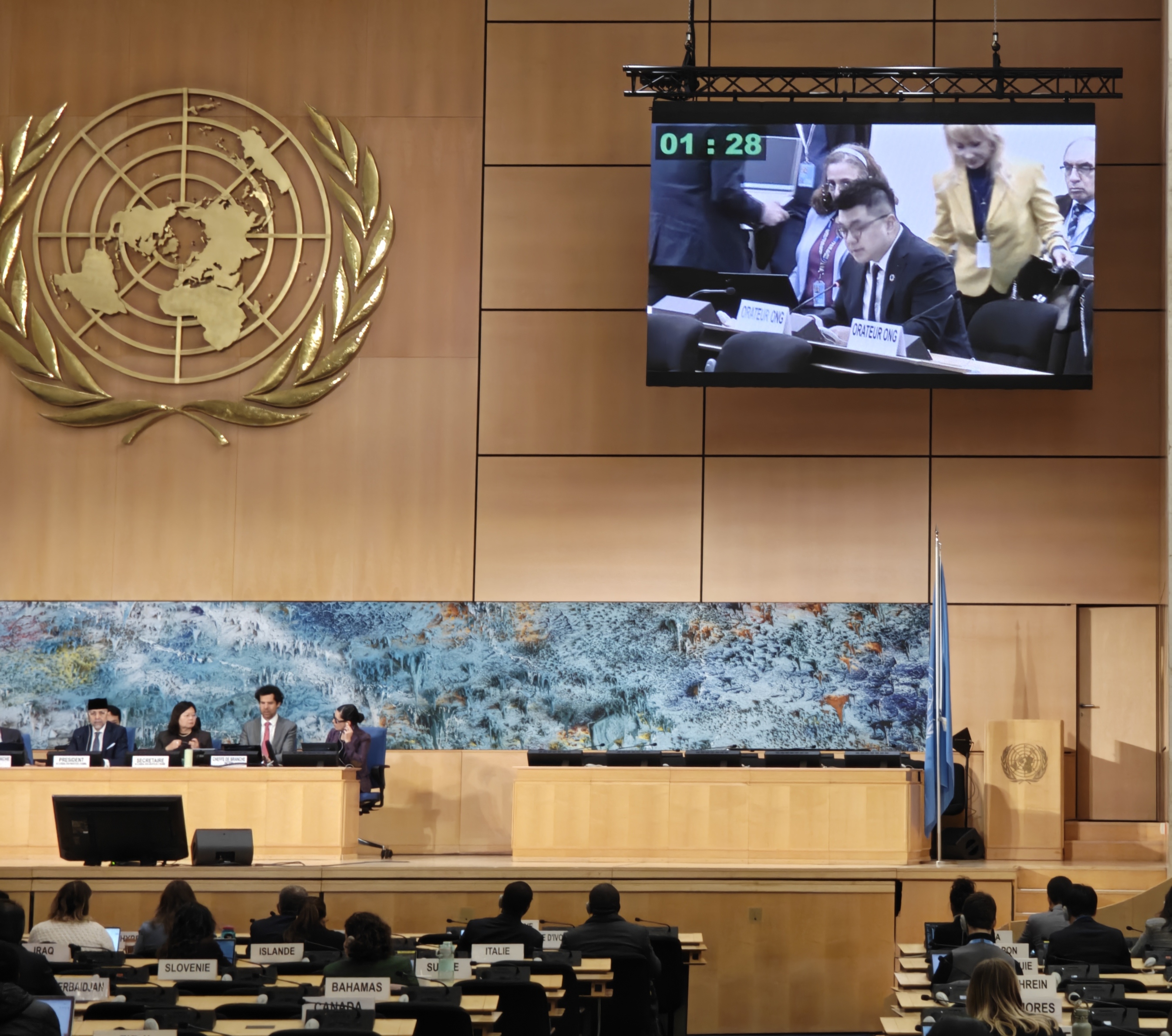
His speech focused on the intrinsic link between cultural participation and the rights of young people:
"Where silence and exclusion persist, the rights of young people remain unrealized. Cultural participation must be seen as a strategic tool for advancing human rights."
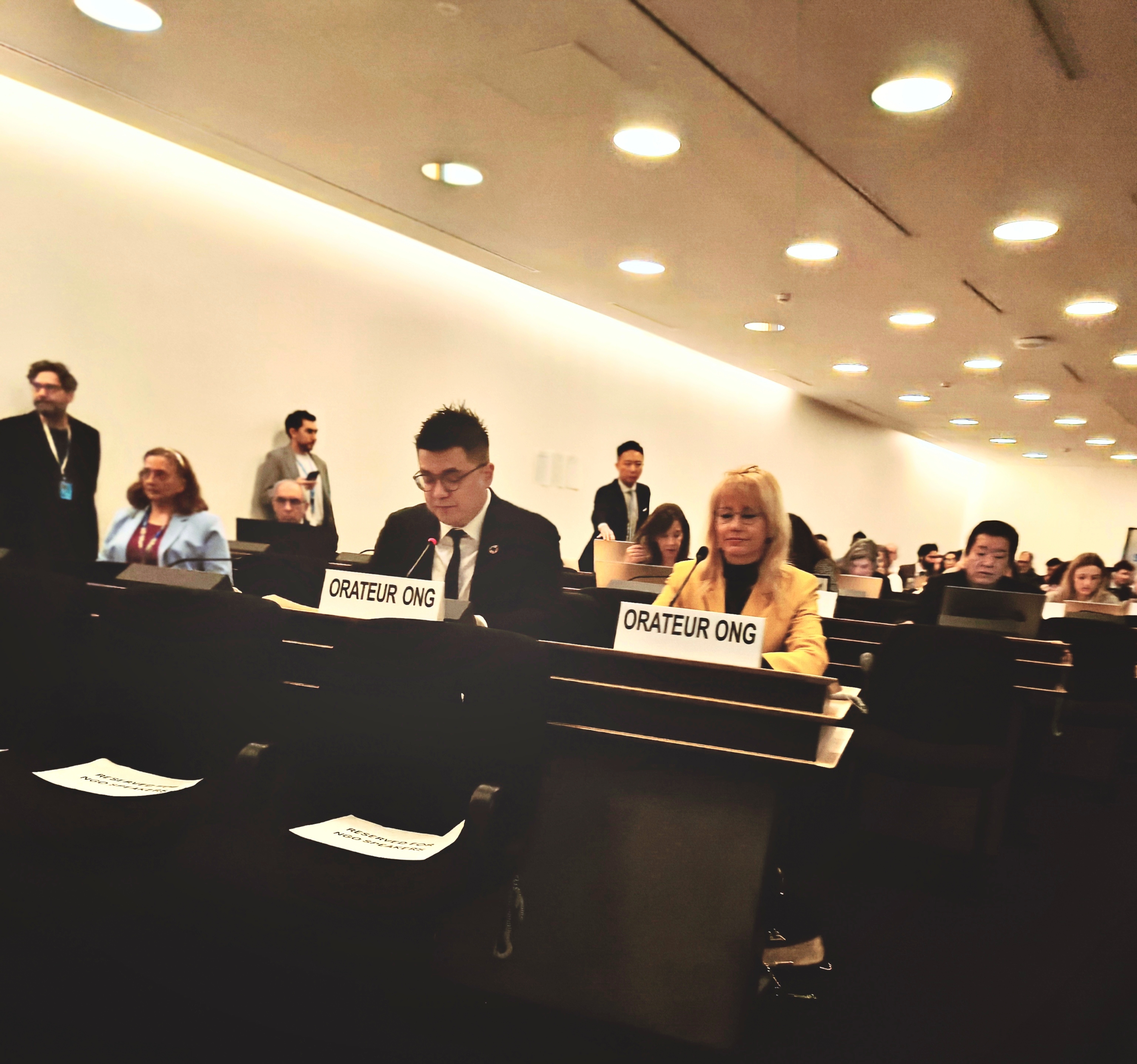
He pointed out that the Beijing Changier Education Foundation works in schools, families, and communities, with a focus on three groups of children who are most often overlooked: adolescents affected by AIDS, children lacking effective parental care, and refugee children who have lost access to education and a sense of identity due to prolonged displacement. He called on all Member States to integrate cultural tools into national frameworks for children's rights, ensure that no child is overlooked in law, policy and practice, and support South-South Cooperation to share proven, replicable models.
Over two consecutive days and across two agenda items, the Beijing Changier Education Foundation delivered two formal statements on record at the Human Rights Council.
The third voice: A side event forum sharing twenty years of Chinese practice
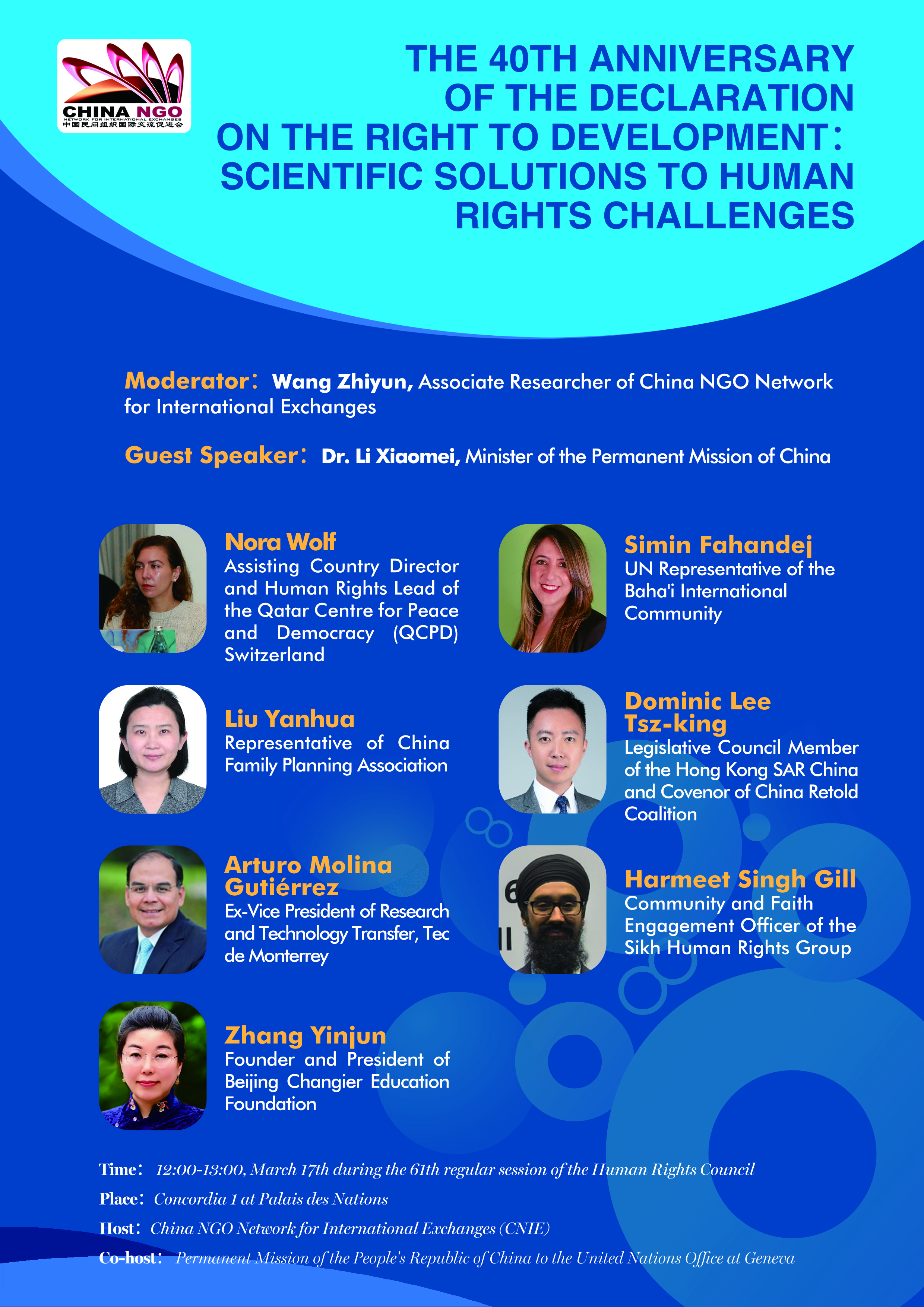
At noon on March 17, a high-level side event was held in Concordia Hall 1 of the Palais des Nations. This side event, themed "The 40th Anniversary of the Declaration on the Right to Development: Scientific Solutions To Human Rights Challenges", was hosted by the China NGO Network for International Exchanges (CNIE) and co-organized by the Permanent Mission of the People's Republic of China to the United Nations Office at Geneva. Dr. Li Xiaomei, Minister of the Permanent Mission of China, attended and delivered remarks. Distinguished representatives from institutions including the Qatar Center for Peace and Democracy, the Bahá'í International Community, the Sikh Human Rights Group, the Legislative Council of the Hong Kong Special Administrative Region, the China Family Planning Association, and the Monterrey Institute of Technology in Mexico came together, joined by United Nations officials and diplomats from various countries, for lively exchanges.
Zhang Yinjun delivered a comprehensive keynote speech at the forum.

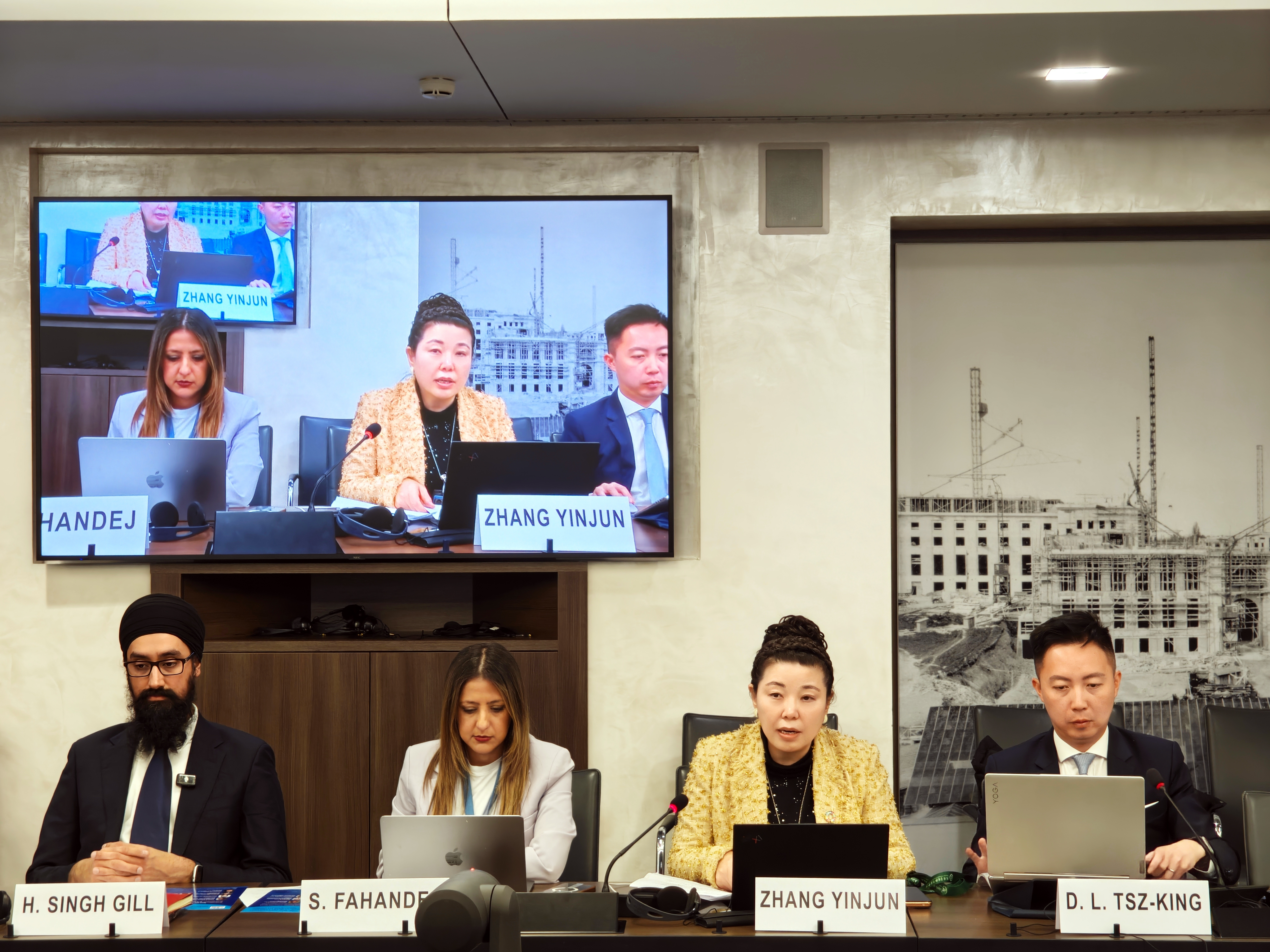
She systematically traced the path that APEPCY has taken over the past twenty years, following the main thread of "from social taboo to school practice to national legislation". She introduced the core architecture of APEPCY: with Changier Huts serving as the anchor point at schools and the Maternal Love Academies as the anchor point for families, the two are connected through standardized curricula, tiered teacher training, continuous supervision, and independent third-party evaluation, forming a complete closed-loop system.
She particularly emphasized: "Forty years after the Declaration on the Right to Development, sex education remains taboo in many countries, and girls' rights to health and education continue to be undermined by this 'silence'." Our experience shows that breaking taboos relies not on courage, but on systems.
She proposed three practical recommendations to the international NGO representatives, United Nations officials, and diplomats from various countries in attendance: integrating adolescent health education into national education policy frameworks and according it institutional status; establishing collaborative mechanisms among governments, schools, families, and civil society; and strengthening South-South exchanges and localized adaptation to enable proven systematic approaches to take root and flourish in diverse cultural contexts.
"Silence has never protected children; systems do." This statement represents the most distilled wisdom from twenty years of practice, and it resonated deeply throughout the international conference hall.
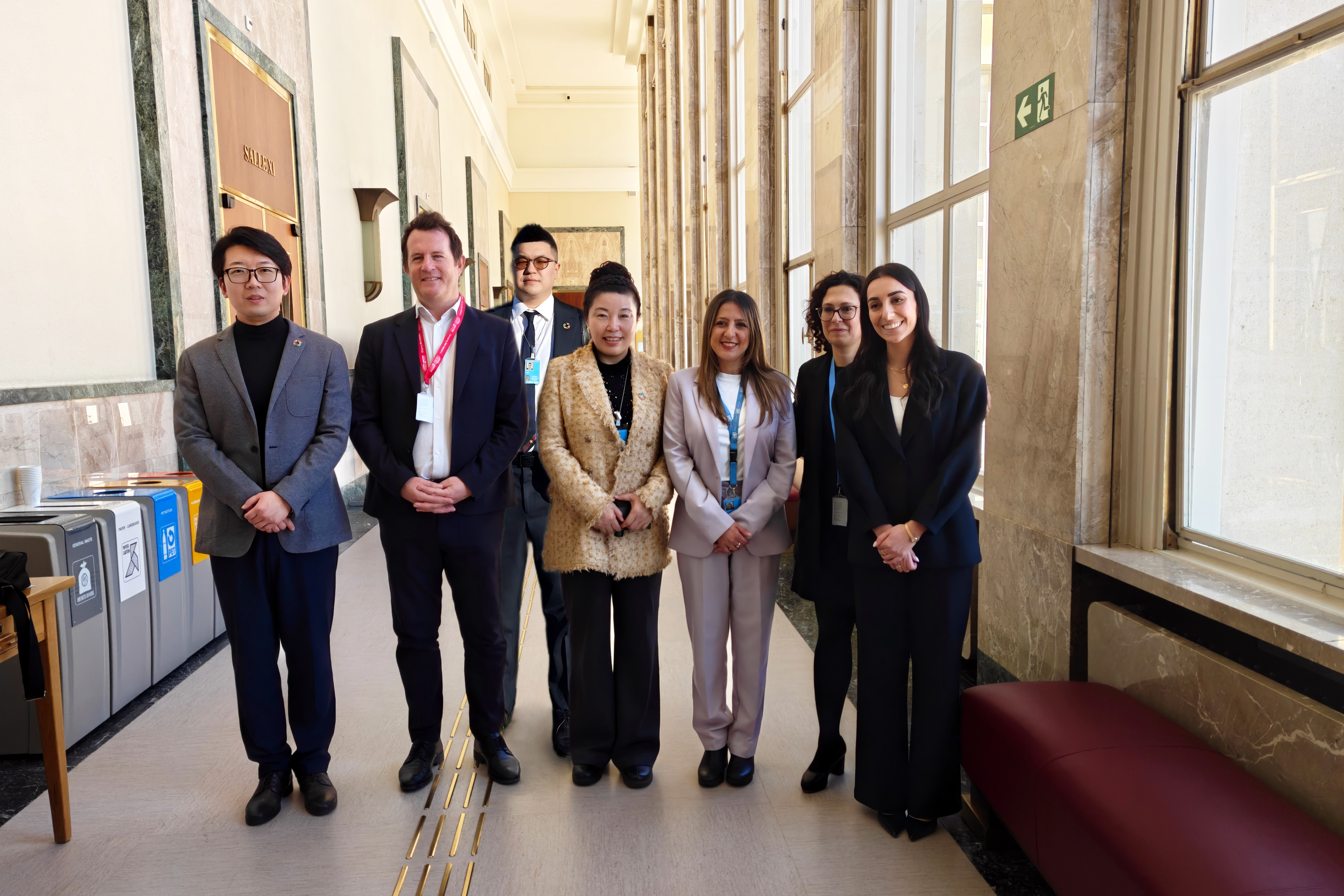
In addition, the Changier delegation participated in multiple side events and exchange activities organized by domestic and international non-governmental organizations at the Palais des Nations, engaging extensively with representatives from various parties through in-depth exchanges and leaving a positive impression in the multilateral forum of the United Nations Human Rights Council.
We venture out to return enriched
This trip to Geneva marks the first stop of the Beijing Changier Education Foundation's 2026 European tour.
commemorative photo with delegation members—Zhang Xiang, Director of the Asset Management Committee of the Beijing Changier Education Foundation; Wang Changkun, Director of the International Affairs Department of the Beijing Changier Education Foundation; and Changier International Goodwill Ambassadors Shu Tong, Han Lijuan, and He Yating. The broken chair stands as an enduring symbol of the international community's call to ban landmines and cluster munitions and protect innocent civilians in war—a vision that resonates deeply with Changier's twenty-year commitment to safeguarding every vulnerable life.

Next, the Changier delegation will continue on to Germany and France to engage in further exchanges and cooperation on topics such as adolescent health education and the internationalization of public welfare models.
The European journey has only just begun.
Coming up next: Coverage from Germany and France—stay tuned
On July 18th, 2016, the five-day 21st International AIDS Conference opened in Durban, South Africa. With the theme of "A...
Oct 31, 2016 Read Details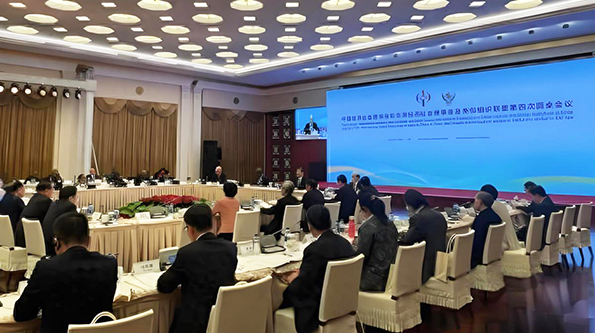
On November 8, the Fourth Round Table Meeting between China Economic and Social Council and African Economic and Social ...
Nov 15, 2024 Read Details
Recently, the Shanghai premiere of the film "Changier" was held at SFC International Cinema (Ganso Dream World Store) in...
Nov 02, 2025 Read Details


We reserve the right to correct and updateany content on this website without notice.
Introduction Articles of Association Organization Structure Milestones Rewards and Certificates Image Ambassadors Endowment Enterprises
Key Events Project News Media Report Announcement Partners Recent News

