


Public welfare hotline:+86-010-84404273
Email: apepcy@apepcy.org
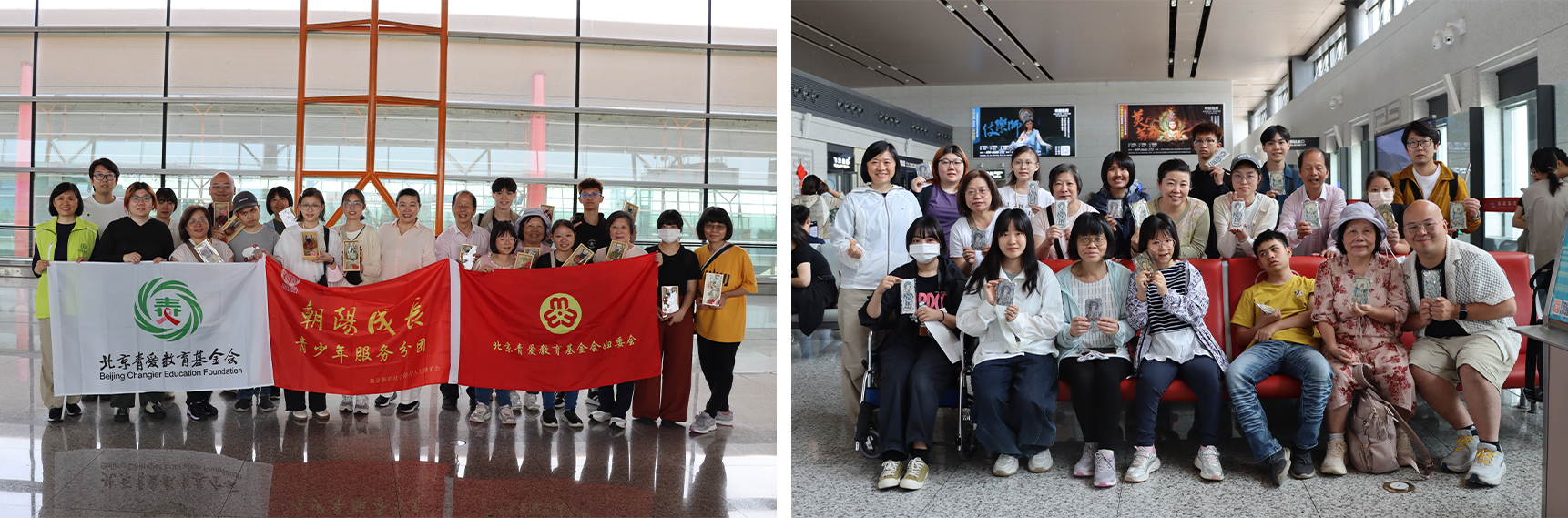
[Introduction] There is a kind of journey taken not to see the scenery, but to find oneself.
After the public welfare segment of the special action for International Children’s Day on June 1 concluded, Chou Ta-Kuan Cultural and Educational Foundation joined hands with the Beijing Changier Education Foundation to lead eight young Taiwanese cancer fighters on a millennia-spanning journey to trace their cultural roots: from the red walls and yellow-tiled roofs of the Palace Museum in Beijing to the flying apsara murals of the Dunhuang desert, and from the strategic gateway of the Silk Road to the crescent-shaped spring at the foot of Mingsha Mountain.
This was no ordinary sightseeing trip. For the first time, these young people, who had once lain in hospital beds staring at the ceiling and counting countless long nights, stood healthy and spirited before the most magnificent legacy left by their ancestors, looking to heaven and earth as they traced their roots and origins. They come from the island of Taiwan, yet they have never been estranged from this land, because the cultural lineage has never been broken.
I. The Palace Museum: Within the Red Walls, Young People from Both Sides of the Strait Read the Same Family History

The afternoon sun fell at an angle across the red walls of the Palace Museum, deepening the vermilion to an even richer, more burning hue. As the eight young Taiwanese cancer survivors entered through the Meridian Gate with the group, their steps slowed almost in unison the moment they crossed the threshold. A sense of solemnity, difficult to put into words, began to spread.
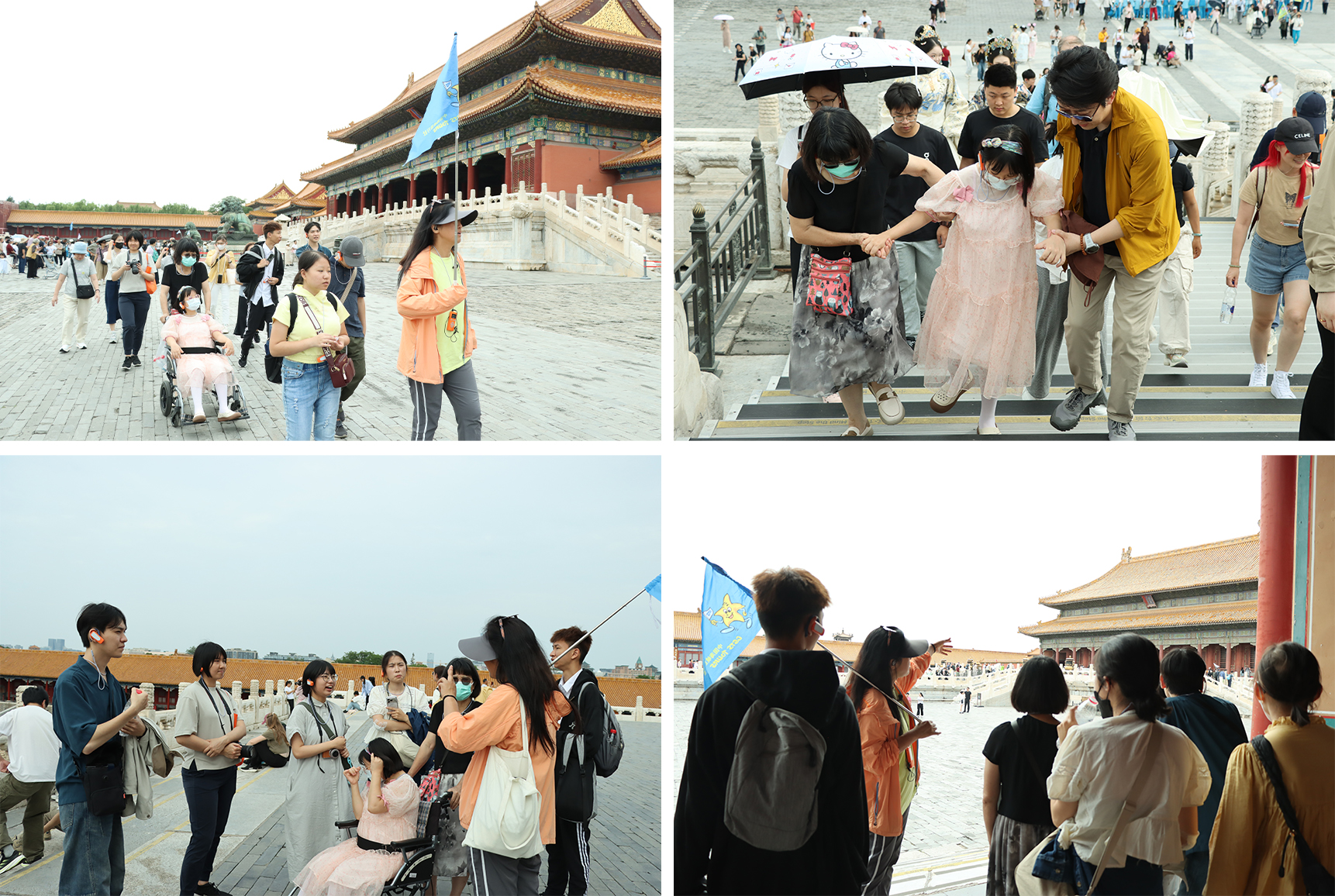
The Palace Museum is the weightiest physical chronicle of Chinese civilization. Six hundred years of trials and more than 9,000 palace rooms: every gray brick and every corridor pillar preserves the deepest memories of this nation. For these young people who grew up in Taiwan, the Palace Museum is not unfamiliar: they had read about it in textbooks and seen traces of it in the artifacts at the National Palace Museum in Taipei. Yet when they actually stood here, before the original site, the original objects, and the original scale, the sense of awe was something no image or text could replicate. The two Palace Museums, one in the south and one in the north, stand as guardians of the same cultural treasures and bearers of the same civilizational heritage. What is held in Taipei are branches that left their homeland; what stands in Beijing is the root system anchored in the earth. Branch and root have never truly been severed.
II. Shazhou Night Market: The Most Authentic Cultural Encounter in the Glow of Everyday Life

From Beijing, the flight crosses the Hexi Corridor before landing in Dunhuang. As the plane broke through the clouds, an ocher expanse of land suddenly spread out beyond the window: no greenery, no glimmer of water, only rolling dunes and Gobi desert, burning in the afterglow of the setting sun like a boundless oil painting. Several of the young Taiwanese pressed their faces against the portholes, gazing out from time to time. For many of them, it was their first glimpse of the true Northwest.
That evening, upon arriving, the group made their way into Shazhou Night Market. Shazhou Night Market is the most vibrant and lively place in Dunhuang. The aroma of donkey meat noodles, the sweet tang of apricot juice, the clamor of the crowd, and the warmth of lantern light all wove together into a vivid tableau of everyday life in the Western Regions. The stalls displayed stone slab paintings, painted sand bottles, and handmade embroidery, each piece a distillation of decades of craftsmanship by local artisans.
Young people from both sides of the strait walked together, pausing and moving on from stall to stall, pointing things out to each other and sharing what they knew. The young Taiwanese visitors were full of curiosity about the food and local customs of the Northwest, and their mainland companions became the most enthusiastic guides. When the Taiwanese visitors in turn spoke of the night market culture of their island home, of oyster omelets at Keelung Miaokow, and of sausage-stuffed sausages at Shilin Night Market, their mainland companions listened with rapt attention and kept asking for more.
The night markets on both sides of the strait differ in accent and in food, yet they share the same vibrancy, the same warmth of human connection, and the same spirit of everyday life. Cultural encounters have never been confined to museums alone. A bowl of noodles, a skewer of lamb, a cup of hot tea — some bonds need no reason at all.
III. Yulin Grottoes and the Dunhuang Museum: Exchange as the Eternal Flame of Civilization

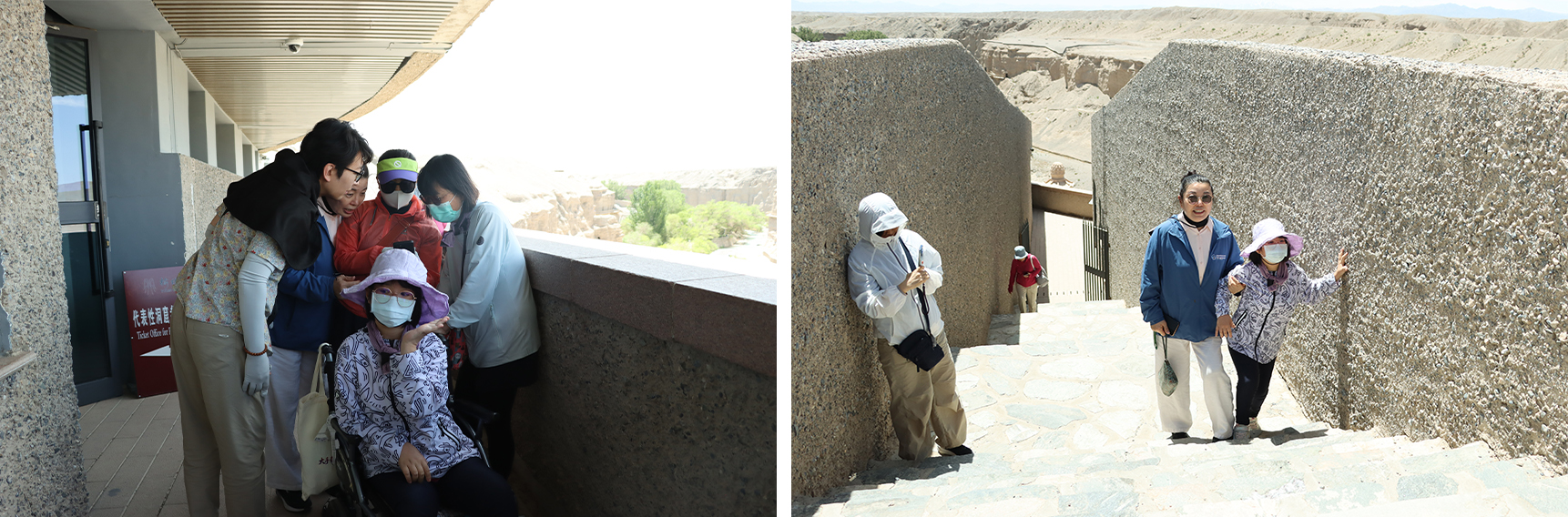
The following morning, the convoy set out for Guazhou and the Yulin Grottoes. The Yulin Grottoes were first carved during the Northern and Southern Dynasties period and continued to be developed through the Sui, Tang, Five Dynasties, Song, Western Xia, and Yuan dynasties. The exquisite murals within the caves make them an indispensable part of the Dunhuang artistic tradition. Less renowned than the Mogao Caves, the Yulin Grottoes are perhaps lesser known to the wider world, yet it is precisely this obscurity that has preserved their quieter, more pristine character.
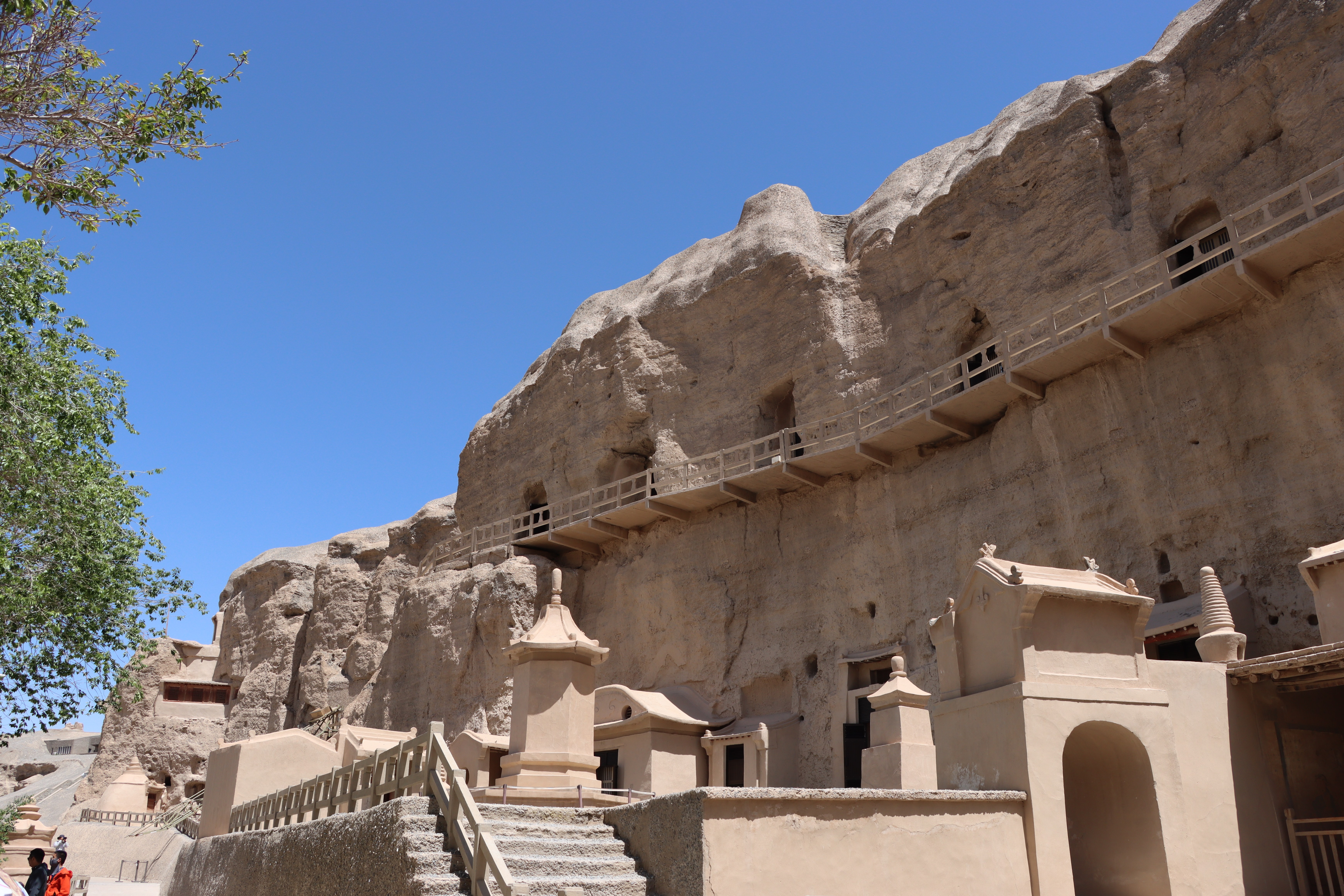
In the murals, the scarves of flying apsaras have billowed in a wind that began a thousand years ago and has never ceased; the faces of the donors, wearing expressions of devout serenity, gaze upon visitors who have arrived from a millennium away. The pigments have grown mottled, yet the lines remain fluid. They were drawn, inch by inch, by pairs of hands in an age without electric lights or scaffolding, with faith as their brush.
Dunhuang was the most important crossroads on the Silk Road. A thousand years ago, silk, porcelain, and papermaking from the East met spices, glassware, and music from the West at this very crossroads; the compassion of Buddhism, the ritual propriety of Confucianism, and the naturalism of Taoism all converged here, finding expression in the incomparable murals and sculptures that adorn the caves.
Dunhuang's greatness lies precisely in its openness to exchange. For young people on both sides of the Taiwan Strait, this is an unspoken metaphor: both sides share the same civilizational roots. Whether those roots can continue to grow and flourish also depends on exchange: sustained, sincere, heart-to-heart exchange.

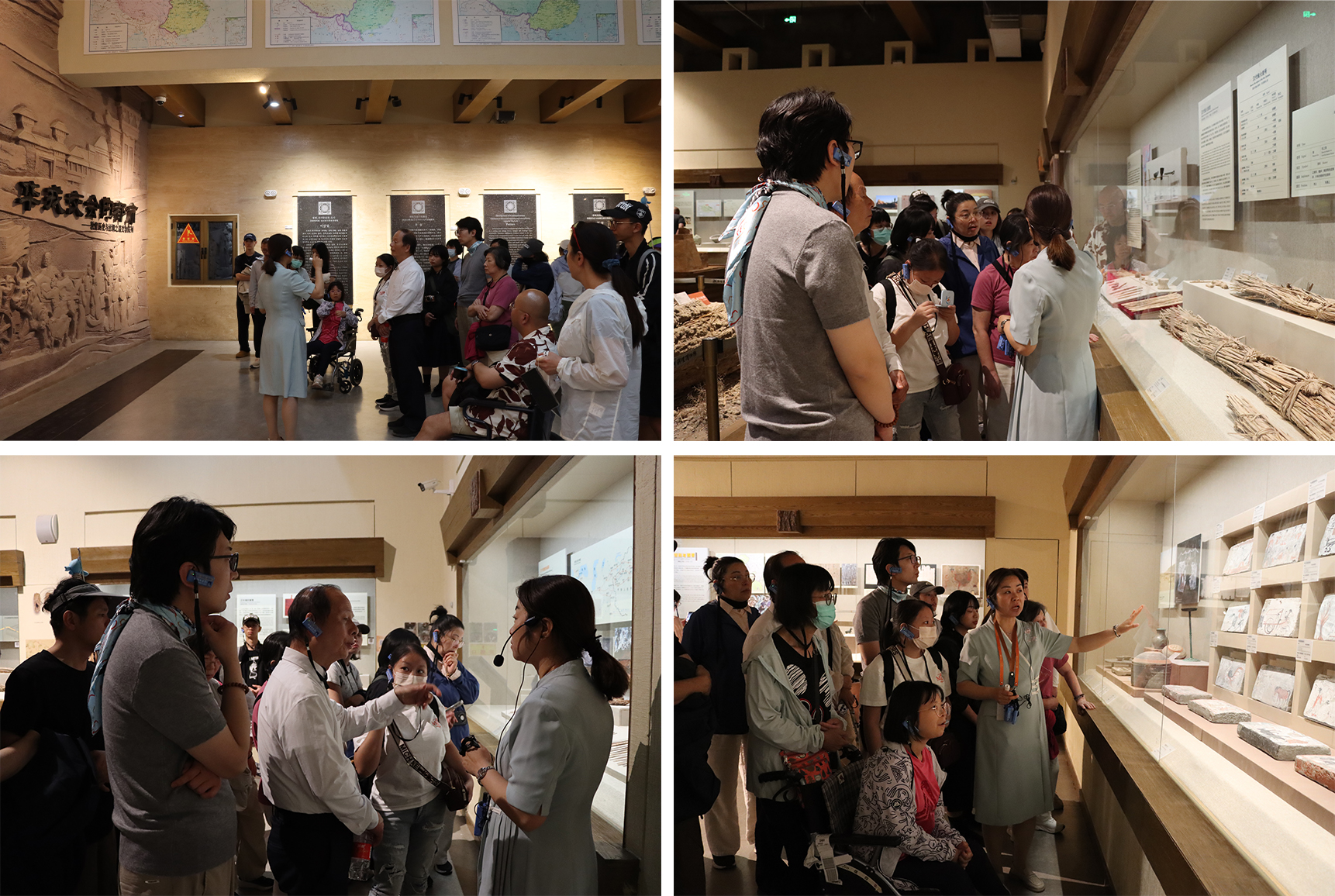
That afternoon, the group visited the Dunhuang Museum. The museum presents a systematic account of Dunhuang's history, spanning from prehistoric times to the modern era. Han dynasty bamboo slips, silk fabrics, manuscripts, and artifacts are displayed in quiet rows, each bearing witness to everything that once unfolded on this land. The young Taiwanese visitors lingered before the display cases for a long time. Some leaned in close, their noses nearly touching the glass; others raised their phones, capturing the artifacts and inscriptions frame by frame.
IV. The Mogao Caves: A City of a Thousand Grottoes, a Pilgrimage of the Heart for Both Sides of the Taiwan Strait

If the Yulin Caves are a hermit, then the Mogao Caves are a sacred city. 735 caves, 45,000 square meters of murals, and more than 2,000 painted sculptures — before entering the Mogao Caves, these are mere numbers; once inside, they become a breathtaking revelation.
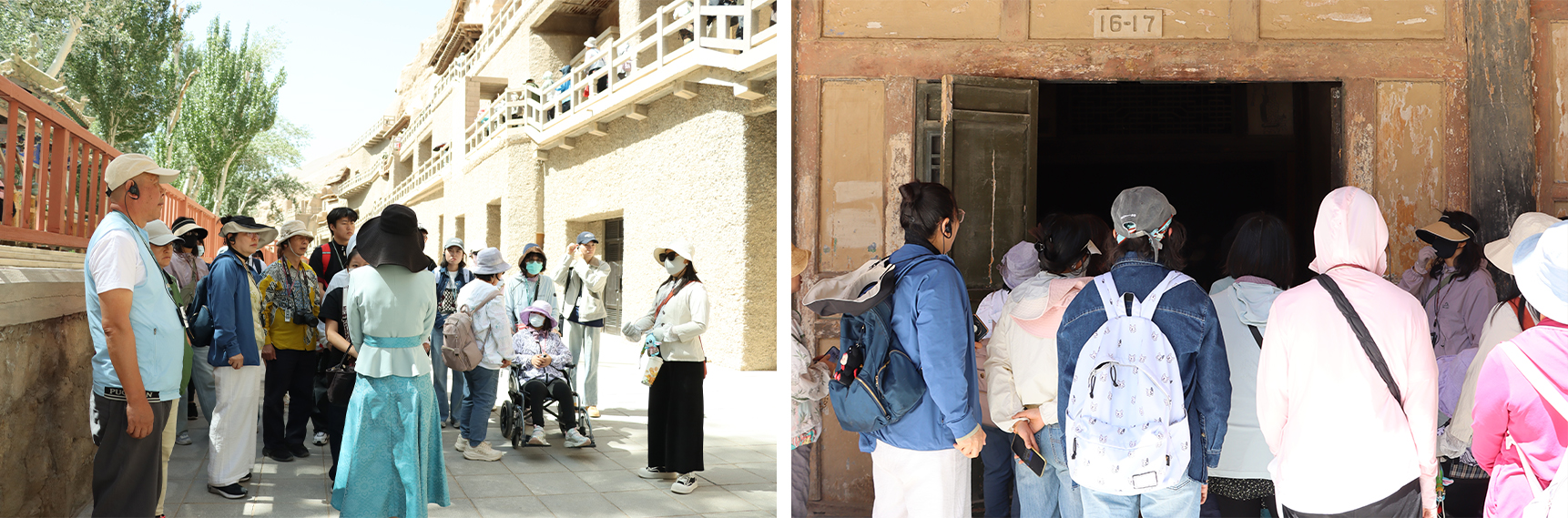
Guided by a professional docent, the group made their way through a curated selection of caves one by one. The cave was dimly lit, with only the beam of a flashlight moving slowly across the murals, gently rousing one story after another from a thousand years of slumber. The murals depict a vast and inexhaustible world: Jataka tales, sutra transformation tableaux, donor portraits, and celestial musicians. Every wall is a scripture, and every inch of pigment a testament of faith. The docent's voice was low and measured, and in the dim stillness of the cave, time itself seemed to slow.
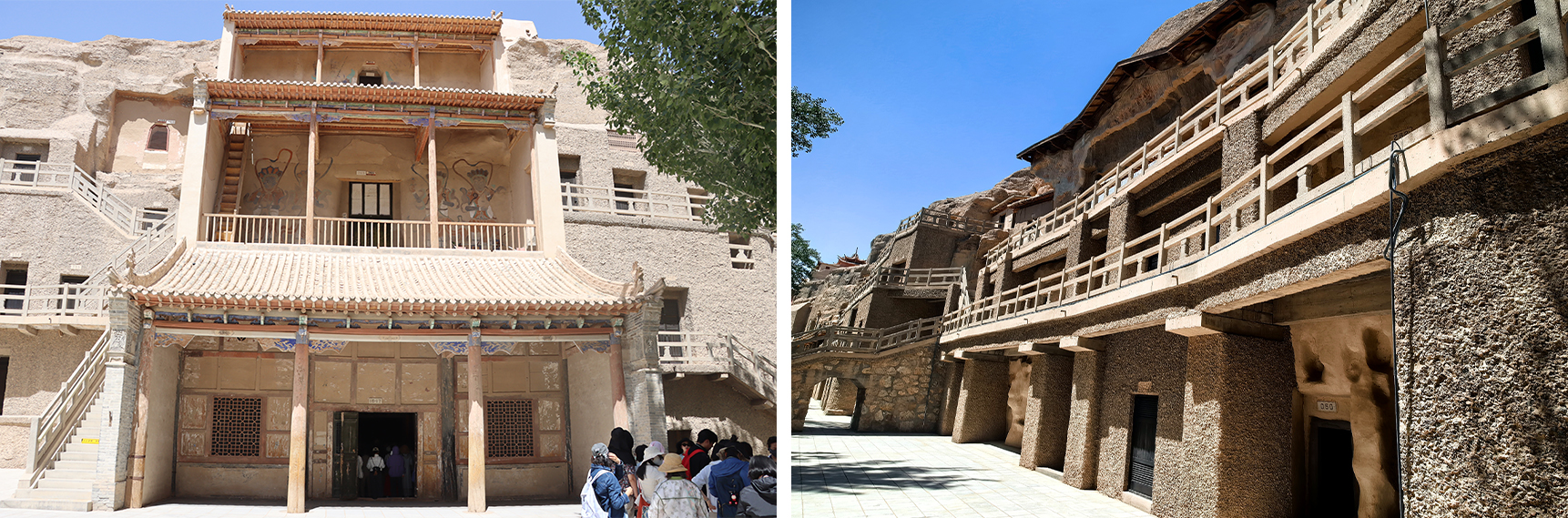
Stepping out of the cave and standing before the sweeping cliff face, one looks up to find countless cave openings layered densely into the yellow sandstone, like a silent hive, or like a chronicle sealed away by wind and sand for a thousand years, waiting quietly at last to be read and understood. Who left behind these caves? Monks, artisans, merchants, generals, and common people, all those who had ever walked this road, prayed along it, labored beside it, or simply paused to rest. The Mogao Caves are not the work of any single individual. They are the crystallization of a nation's collective will across a thousand years.

Across the distance of the strait, across the years of illness and pain, they stood here and felt it clearly: a thread that had always been there, connecting them, never once severed. Here, in the depths of this vast desert, they felt a warm encounter with the collective will of a nation. Outside the Mogao Caves, wind sweeps in from the depths of the Gobi, carrying fine sand and the echoes of a thousand years. The group paused before the Nine-Story Building. The sun stretched their shadows long across the ancient ground, where they quietly merged with those of nameless monks, artisans, and travelers who had once passed this way.
V. Mingsha Mountain and Crescent Moon Spring: A Different Understanding of Life in the Heart of the Desert

The final day of the journey was given over to Mingsha Mountain and Crescent Moon Spring. Mingsha Mountain is a singing sand dune. When the wind blows, the fine sand shifts and stirs, releasing a deep, far-reaching sound, like drumbeats, like crashing waves, like some distant call carried across the ages. In the sunlight, the dunes glow with a flowing gold, each ridge of sand like a trace left by a divine finger drawn gently across the surface.
Climbing the dunes was the most strenuous part of the day. The sand was soft and fine. With each step, a foot sank halfway in, then had to be pulled free, only to sink again. The older members walked slowly, and the younger ones slowed their pace to match, reaching out a hand to offer a pull or a steadying arm, all amid laughter. The laughter drifted out across the desert and dissolved into the boundless gold.
Yet when they finally reached the top of the dune and looked back at the path they had taken, at that trail of footprints, some deep and some faint, winding all the way from the foot of the hill to where they stood, all their exhaustion, in that moment, turned into a feeling of wordless emotion. Is life not the same? Every step may pull you down, and with every step you must lift yourself back up. It does not matter if you move slowly; someone is there to pull you along. It does not matter if you grow tired; the view from the top is worth it.

At the foot of the dunes, Crescent Moon Spring lay nestled quietly in the embrace of the sand, its waters clear as a mirror, reflecting the blue sky and the golden dunes above. This small pool of water has survived for thousands of years, surrounded on all sides by desert, and has never run dry.
"How has it managed to survive?" someone asked. No one could offer an answer beyond what science provides. Yet everyone felt it: even in the most desolate of places, life can still find its own way, existing quietly, tenaciously, and beautifully. Is this not the very path these young people have walked?
The desert wind swept through, carrying grains of sand and something vast and gentle with it.
VI. Shared Cultural Roots: Young People from Both Sides of the Strait Embrace the Future Together
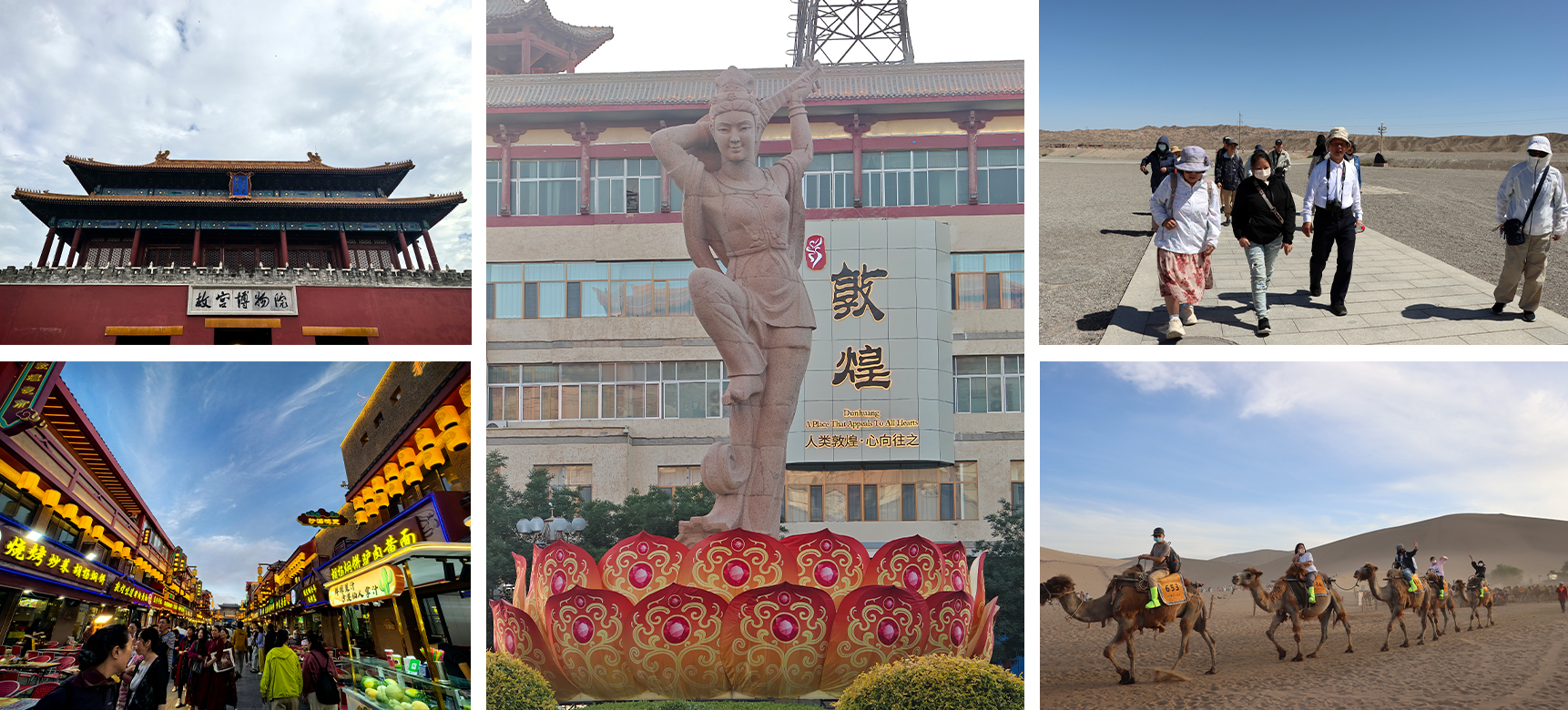
From the red walls of the Palace Museumy to the grottoes of Yulin; from the everyday warmth of Shazhou to the apsaras of the Mogao Caves; from the golden sand ridges of Mingsha Mountain to the clear, mirror-like waters of Crescent Spring, this journey covers more than geographical distance. It is a spiritual corridor leading from Beijing to the Northwest, from the present day to a thousand years past, and from individual lives to the cultural lineage of a nation.
On this journey, no one was merely a tourist. They were seekers of their roots. They came to the oldest place on this land, carrying their own journeys through illness and rebirth. There, they bent down to listen to the echoes of civilization, to the breath of history, and to a voice that has endured for millennia, unbroken: we share the same roots.
Dunhuang has taught us that it is through exchange that civilizations endure, and it is through openness that the Silk Road gave rise to the most magnificent cultural fusion in human history. For young people on both sides of the Taiwan Strait, this holds especially true: replace estrangement with sincerity, misunderstanding with empathy, and distance with togetherness. Every handshake across the Taiwan Strait writes a new chapter of the "Silk Road".
This journey of cultural root-seeking is the second movement of the "Unite as One Family Across the Straits, Give Love Wings to Fly" series. The first chapter saw love flow through hospital wards; the second saw roots take hold in the veins of shared culture. And all of this will converge into the same river, flowing toward the same sea.
In 2026, the story of "Unite as One Family Across the Straits, Give Love Wings to Fly" gently closes its pages here.

The 2023 World AIDS Day themed publicity month campaign launch ceremony in Hunan Province On December 1, the launch cere...
Dec 02, 2023 Read Details
On July 20th, 2015, the "2015 APEPCY National Seed Teacher Training" was held in Beijing. It was sponsored by Benshan Me...
Jul 22, 2015 Read Details
On November 24th, a 5-day team training session for mental health education personal were successfully concluded in the ...
Nov 25, 2023 Read Details


We reserve the right to correct and updateany content on this website without notice.
Introduction Articles of Association Organization Structure Milestones Rewards and Certificates Image Ambassadors Endowment Enterprises
Key Events Project News Media Report Announcement Partners Recent News

